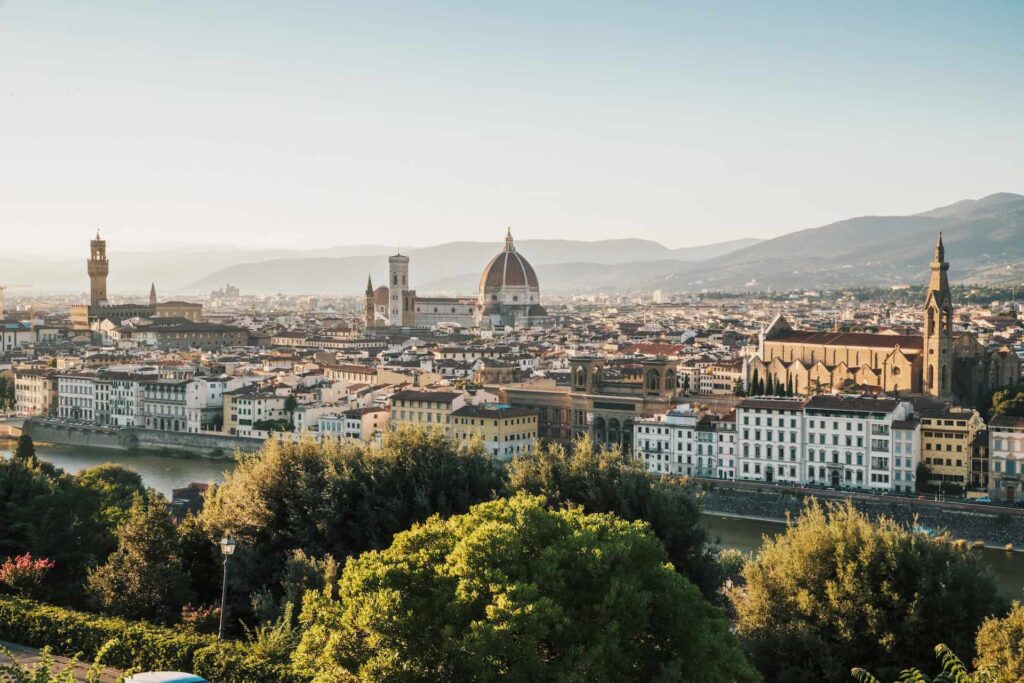


Visitors to Florence usually arrive with a precise list in mind: the Duomo, the Uffizi, Ponte Vecchio, the David at the Accademia. In recent years another item has been added to that list, a much smaller one, bouncing between social media and travel guides: the wine windows, or buchette del vino, as Florentines call them.
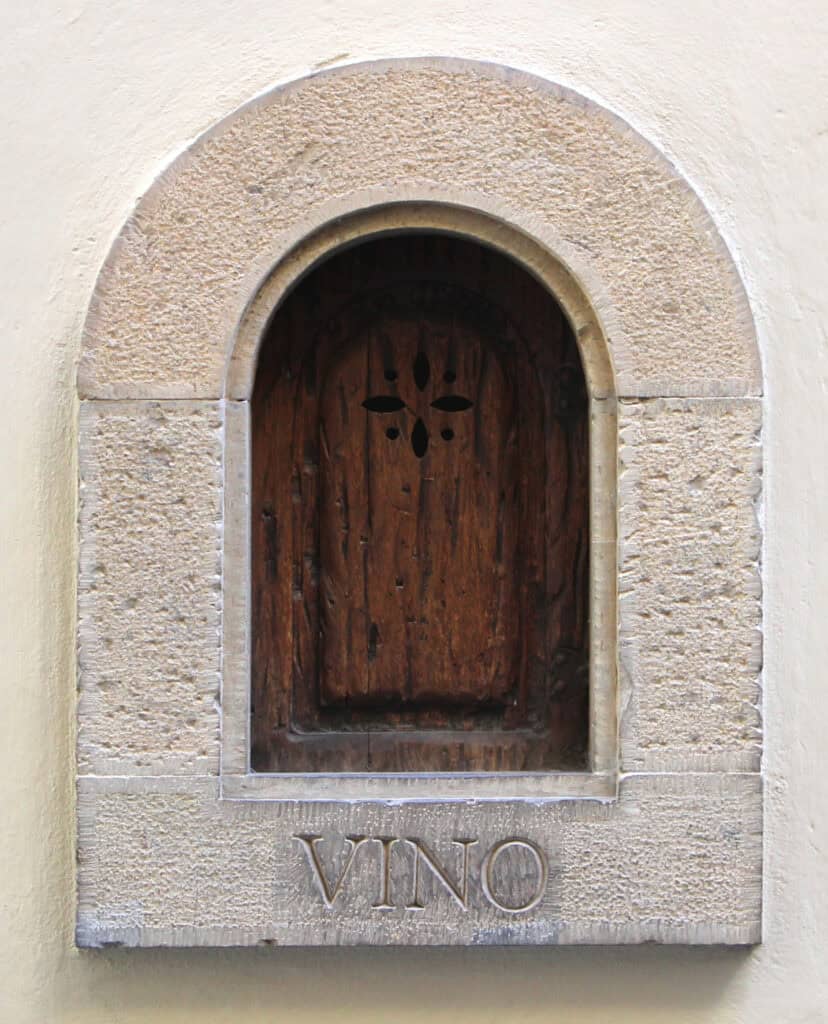
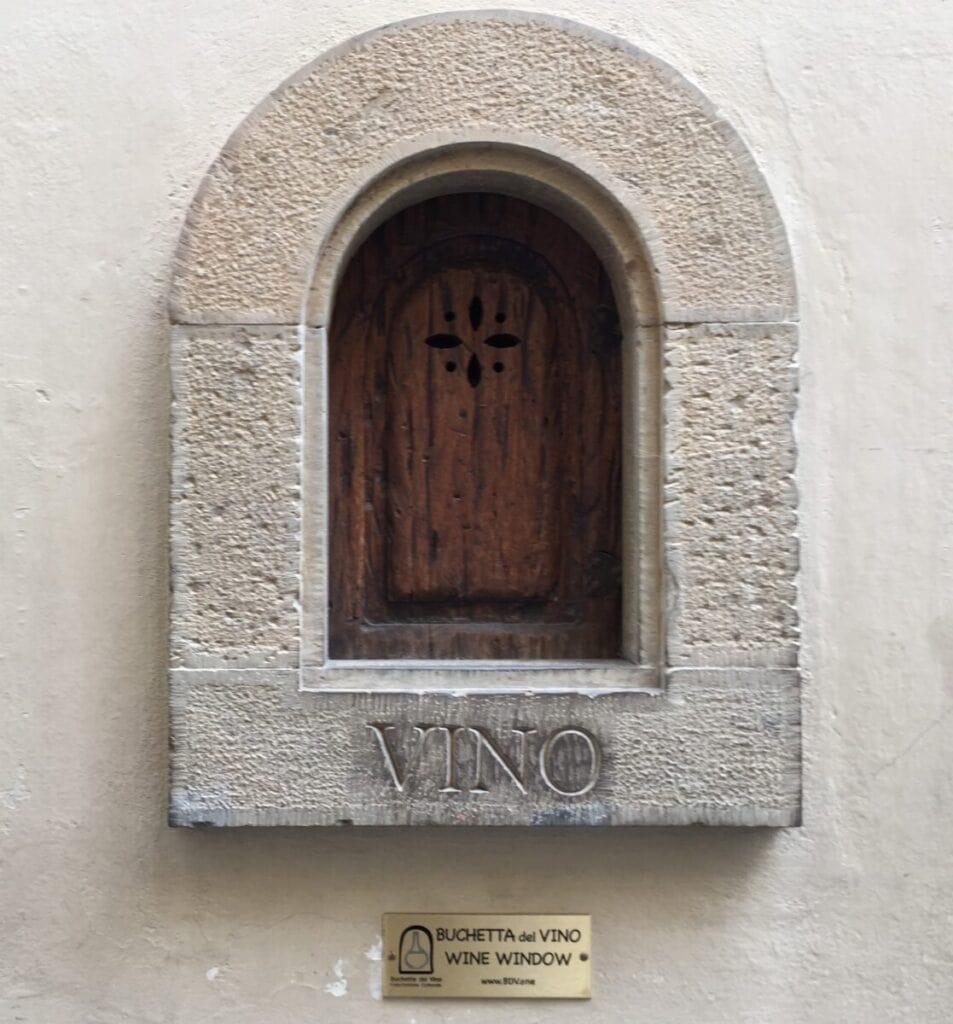
Wine windows are small arched openings carved into the walls of palaces in the historic center, on the ground floor and almost always next to the main door. They have a stone frame, a little wooden door, and they are just big enough to pass a flask through. For centuries, Florence’s noble families used them to sell passers-by the wine produced on their country estates, without going through the innkeepers.
The Buchette del Vino association, which has been searching for them and cataloguing them since 2015, has counted 161 in the historic center and 27 outside the ancient city walls. Many of them have been bricked up or closed for decades. Others, however, are working again: bars and restaurants have reopened them to serve wine and spritz straight onto the street, and the most famous ones have a queue outside!
During my walks, they are one of the details I’m asked about the most. I’ll tell you how they worked, what the 17th-century plague had to do with them, where to find the original ones, and which ones still serve drinks today.
How buying wine from a wine window worked
Behind each wine window there was a small room on the ground floor of the palace, connected to the cellar where the family kept the barrels brought in from the countryside. During selling hours, a servant waited there for customers.
Anyone who wanted to buy wine came to the palace with their own empty flask and knocked on the little door. The servant opened it, took the flask, filled it in the cellar and handed it back through the same opening, collecting the coins. There was no need to enter the palace or speak to the owners: everything passed through that small window in the wall.
Wine was bought to take home and drink at the table, together with bread and whatever there was to eat. The glass of wine enjoyed standing in front of the palace, the one you see in photos on social media today, is a habit that has only appeared in recent years.
In old documents, wine windows also appear as wine tabernacles. The name comes from the pietra serena frame, smooth or rusticated like the façade of the palace, which recalls the tabernacles with sacred images found on the corners of so many Florentine streets.
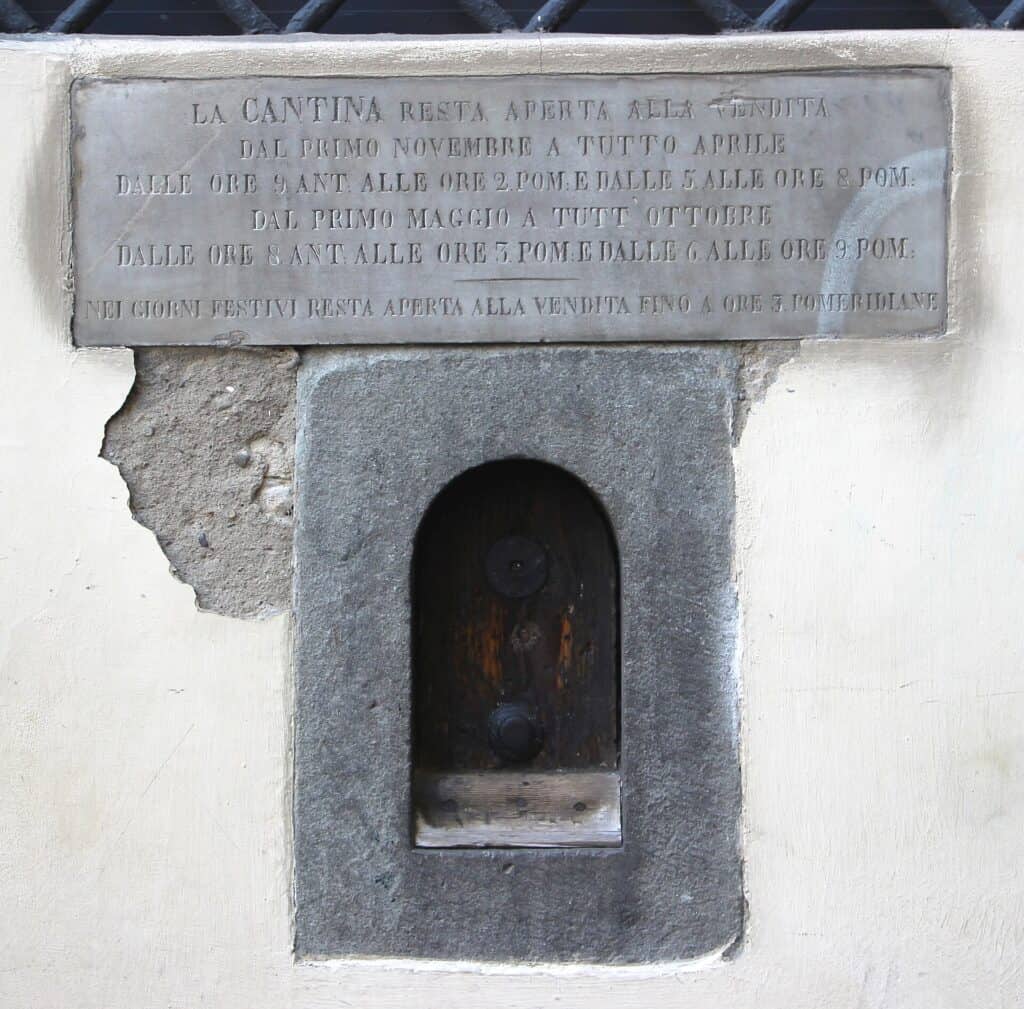
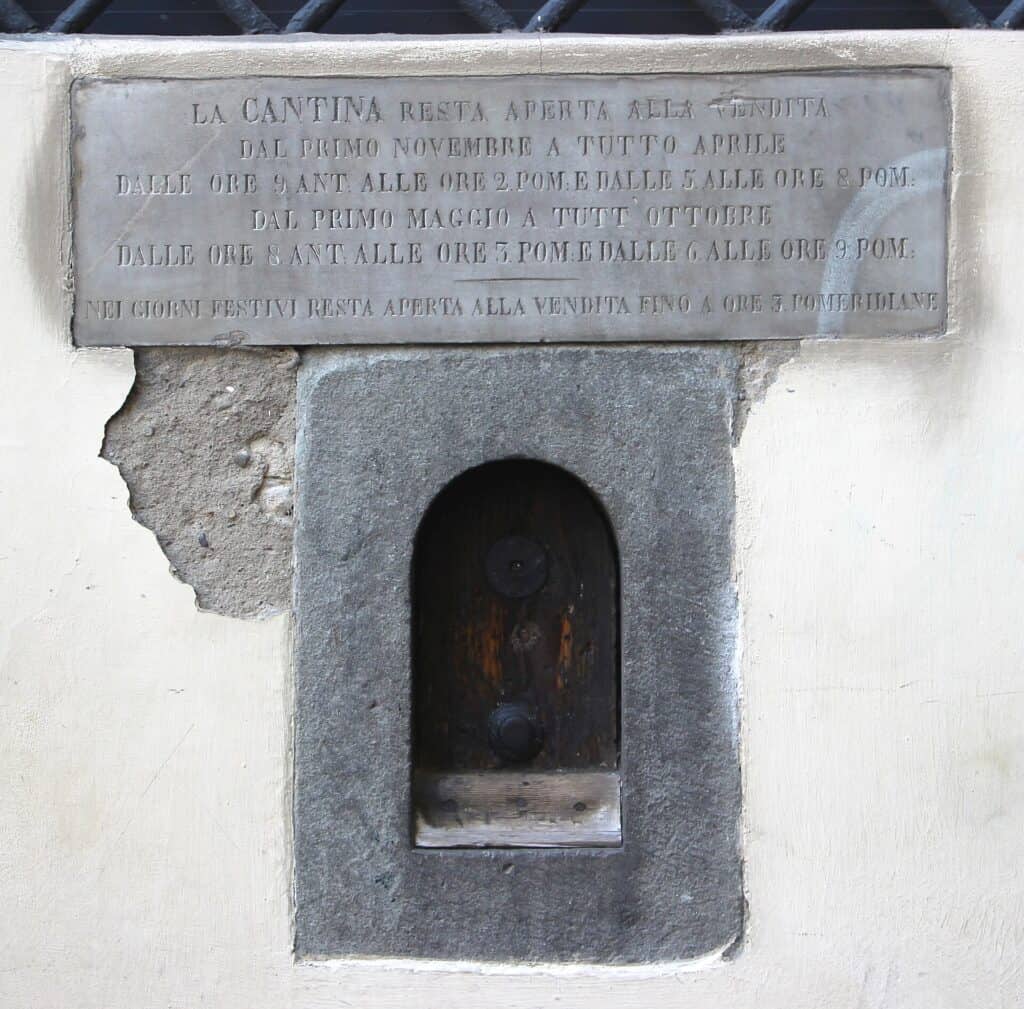
Some wine windows still have the plaque showing the selling hours. Wine was not sold at any time of day, and the hours changed between the cold and the warm season: if you arrived late, you found the little door shut and had to come back the next day.
Why Florentine nobles sold wine from their front walls
In the 16th century, Florence’s great families, who had built their fortunes on the wool and silk trade and on banking, began investing more and more in land. They bought villas and farms in the hills around Florence, where they produced oil, grain and, above all, wine.
That wine came into the city and had to be sold. The story goes that it was the Medici who allowed noble families to sell it directly from their palaces, by retail, without going through taverns and wine merchants. Which Grand Duke granted this permission, and in which year, is a matter on which accounts differ, and no document confirming it has ever turned up.
What we do know is that the habit spread widely. Wine windows appear on the palaces of almost all the great families in the center, and the names linked to this trade include the Antinori, the Frescobaldi and the Ricasoli, families who still make wine today.
There is also a story often told on tours. It is said that, every now and then, a little bread or a flask of wine was left in the wine windows of the richest palaces for those who could not afford it, so they could take it without being recognized. It’s a much-loved story, but so far no document has confirmed it.
During the plague of 1630, wine windows helped avoid contagion
Between 1630 and 1633, Florence was struck by a plague epidemic that killed thousands of people. The Florentine historian Francesco Rondinelli described those years in a report published in 1634, and in one passage he mentions wine sellers serving customers through a small hatch in the wall, without letting them in and without coming close.
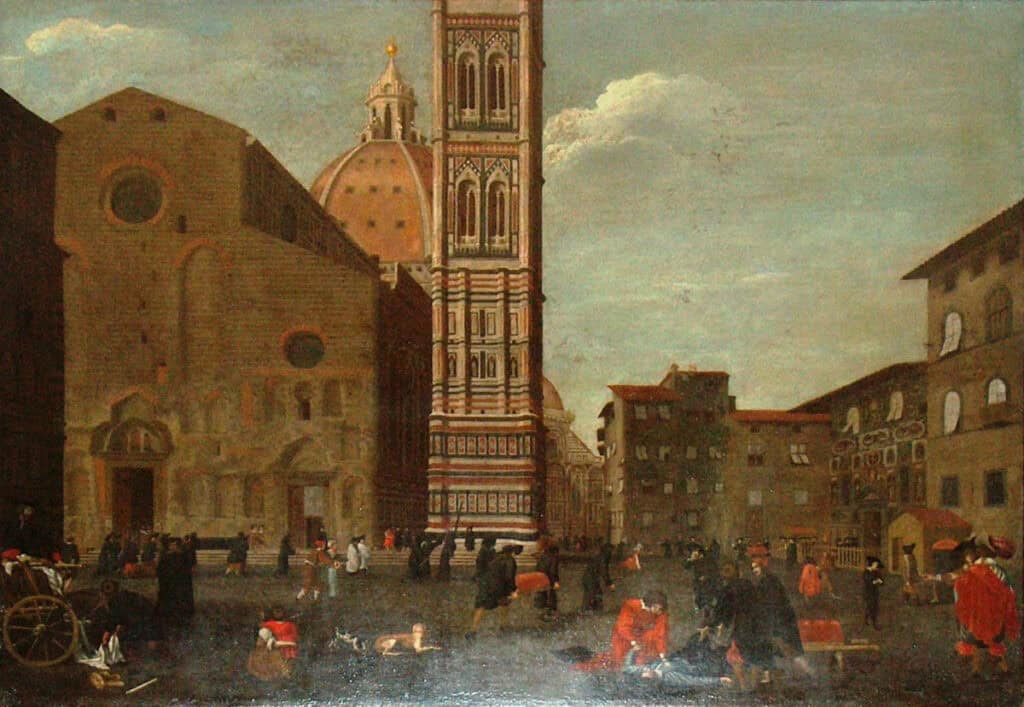
Money passed through the same opening, with a few extra precautions. According to Rondinelli, before touching the coins the sellers washed them in vinegar, which at the time was considered a good disinfectant. It is one of the oldest written accounts of how wine windows were used, and it tells us that Florentines were already using them to keep their distance back then.
Almost four hundred years later, something very similar happened. In the spring of 2020, during the Covid pandemic, some places in the center that had an original wine window reopened it to serve wine, coffee and gelato without letting customers inside. Photos of those glasses passing through the wall ended up in newspapers around the world, from CNN to Smithsonian Magazine. That is where the wine windows’ fame among tourists began.
In the 20th century most wine windows were bricked up
Over time, things changed. People began buying wine in bottles, in shops and wine stores, and noble families stopped selling it from their palaces. The wine windows lost their purpose, and many were bricked up or turned into letterboxes or alms boxes.
The hardest blow came in November 1966, with the flood of the Arno. Water and mud filled the ground floors of the palaces in the center, and many of the little wooden doors were lost forever. For decades the wine windows remained there, on the façades, with almost no one remembering what they had been used for.
It was the Buchette del Vino association, founded in Florence in 2015, that gave them back their identity. Its members searched for them palace by palace, photographed and catalogued them, and reconstructed their history through documents and accounts. Besides those in Florence, they found about a hundred in other Tuscan towns. Next to many original wine windows in the center you will now find a small plaque placed by the association, which marks them and briefly tells their story.
Where to see the original wine windows in Florence
To see a wine window you don’t need to queue in front of a bar. Just walk around the historic center paying attention to the ground floor of the noble palaces, especially near the main doors. Here are the areas where you’ll find the most, and some of the prettiest.
Via del Giglio and Via del Sole, near Santa Maria Novella
The Santa Maria Novella area has two of the best-preserved wine windows in Florence. The one on Via del Giglio, a few steps from the Medici Chapels, still has its frame intact and, not far away, the plaque with the selling hours. The one on Via del Sole is on a quiet street a few minutes’ walk from Piazza Santa Maria Novella.
Palazzo Antinori and Via delle Belle Donne
Palazzo Antinori overlooks the small square at the end of Via Tornabuoni, one of Florence’s luxury shopping streets. Its wine window is on the side of the palace, on Via del Trebbio, and belongs to one of the oldest families in Tuscan wine: the Antinori have been making wine for over six hundred years, and their cellars in Chianti are one of the stops on my food and wine tour in the Florentine Chianti.
From here, in two minutes you reach Via delle Belle Donne, where there are more wine windows, including one of the most photographed in the city. I also wrote about this street and its name in Why are the streets of Florence called that way?.
Via dei Servi and Via dell’Oriuolo, behind the Duomo
Behind the Duomo, between Via dei Servi and Via dell’Oriuolo, there is a less crowded area with many historic wine windows. None of them serve drinks anymore, but walking here you realize how widespread selling wine from palaces was in Florence a few centuries ago.
Santa Croce and the palaces around the square
Around Piazza Santa Croce, too, the noble palaces keep many original wine windows, especially on Via Verdi, Borgo dei Greci and Via dell’Anguillara. You can look for them before or after a guided tour of the Basilica of Santa Croce, which stands right at the end of the square.
Via Santo Spirito, in the Oltrarno
On the other side of the Arno, Via Santo Spirito is a good place to start. At numbers 29 and 31, on the façade of Casa Manetti, there is an original wine window with its stone frame. A few steps further on you’ll find Babae, which serves drinks again today. From here you can continue toward Piazza Santo Spirito and Via dei Serragli, where you’ll spot more of them on the palaces.
The wine windows where you can drink a glass today
The wine windows serving drinks today are just over a dozen. They belong to restaurants, osterie, wine bars and cafés that have reopened the wine window in their building and use it as a small counter onto the street. Opening hours change often, depending on the season and the place, so I recommend checking before you go. Here they are, divided by area.
In the center
Osteria Belle Donne, at Via delle Belle Donne 16r, is probably the most photographed wine window in Florence, with its flower-covered frame. That is exactly why there’s almost always a queue, especially in the late afternoon. Not far away, at Via dei Palchetti 6r, Il Latini has its wine window next to the entrance: it started out as a wine shop and later became one of the best-known trattorias in the city. If you’re looking for more places to eat, I’ve put together some tips on where to eat typical food in Florence.
In Piazza degli Strozzi, on the side of the building facing Via degli Anselmi, there is the Strozzino wine window, run by Café Odeon. It’s a little hidden and usually much quieter than the others. Behind the Duomo, on Via de’ Pucci, Cantina de’ Pucci has reopened the wine window of the Pucci family palace.
In the Oltrarno
Babae, at Via Santo Spirito 21r, was one of the first to reopen, and today it’s one of the best known. Its fame grew even more after the Florence episode of Stanley Tucci’s show on Italian food. Besides the classic red and white, you’ll also find some less common wines here.
A few minutes’ walk away, at Via dei Serragli 47, there is Fiaschetteria Fantappié, a small wine shop with a few tables outside. Heading toward Ponte Vecchio instead, Osteria De’ Bardi at Via de’ Bardi 25r opened its wine window in 2025, with official recognition from the association.
In Santa Croce
Ristorante Pietrabianca has its wine window at Piazza dei Peruzzi 5r. The square is curved because it follows the outline of Florence’s ancient Roman amphitheater, on whose remains the surrounding buildings were built. Near the basilica, at Borgo dei Greci 1r, Osteria San Fiorenzo has its wine window next to the restaurant entrance.
A little further on, at Via Isola delle Stinche 7r, you’ll find Vivoli, one of the oldest gelato shops in the city. Here the wine window is used for gelato and coffee. During the 2020 lockdown Vivoli was one of the first to reopen theirs, and photos of its cones passing through the wall were shared widely.
If you’d rather see them with a guide
If you’d like to see them all in a single walk, with the history told street by street and a few glasses along the way, I designed the Wine Windows Walking Tour for exactly that. We start from Piazza Santa Maria Novella and end in Piazza Santa Croce, alternating working wine windows with Tuscan wine tastings and historic wine windows, passing by Il Latini, Belle Donne, Cantina de’ Pucci and Vivoli. If you’re more interested in Florentine food, there’s the afternoon food and wine tour, among historic shops and tastings of local products.
What to know before ordering from a wine window
Wine windows serving alcohol stop selling wine at 9 pm, when the ban on drinking alcohol in the street kicks in downtown. So if you like the idea of a glass from a wine window, plan for the afternoon or early evening.
The little door is often closed even when the place is open. There is usually a bell to ring, or you can simply knock on the wood and someone will open it. A glass generally costs between 5 and 10 euros. Some places give you a real glass for a small deposit, refunded when you bring it back, while others use plastic takeaway cups.
The owners care about this a lot: don’t stop to drink in front of the windows of the shops nearby. Stay close to the bar, or get your drink to go and take a stroll. And if there’s a bit of a queue, do as the Florentines do and be patient!
In recent years new wine windows have also appeared, carved into the walls by places that wanted the same queue of tourists. The association has asked the city council several times for checks and rules, because these fake wine windows are easily mistaken for the old ones. To recognize an original, look at the stone frame, worn by time, and look for the association’s plaque, which you’ll find next to many of them.
Wine windows tell the story of everyday life in old Florence
Wine windows are one of my favorite details to point out during walks in the center. They tell a piece of the city’s everyday life, made of cellars, flasks and servants waiting for customers behind a wall, and they do it on palaces you walk past anyway on your way from one museum to the next. If you’re short on time, many of them are along the route I recommend in What to see in Florence in one day.
I had already mentioned them among the details to look out for in Curiosities you can see in Florence, area by area. If you enjoy these stories, you’ll find more in Legends and hidden curiosities of Florence between the Duomo and the Uffizi!