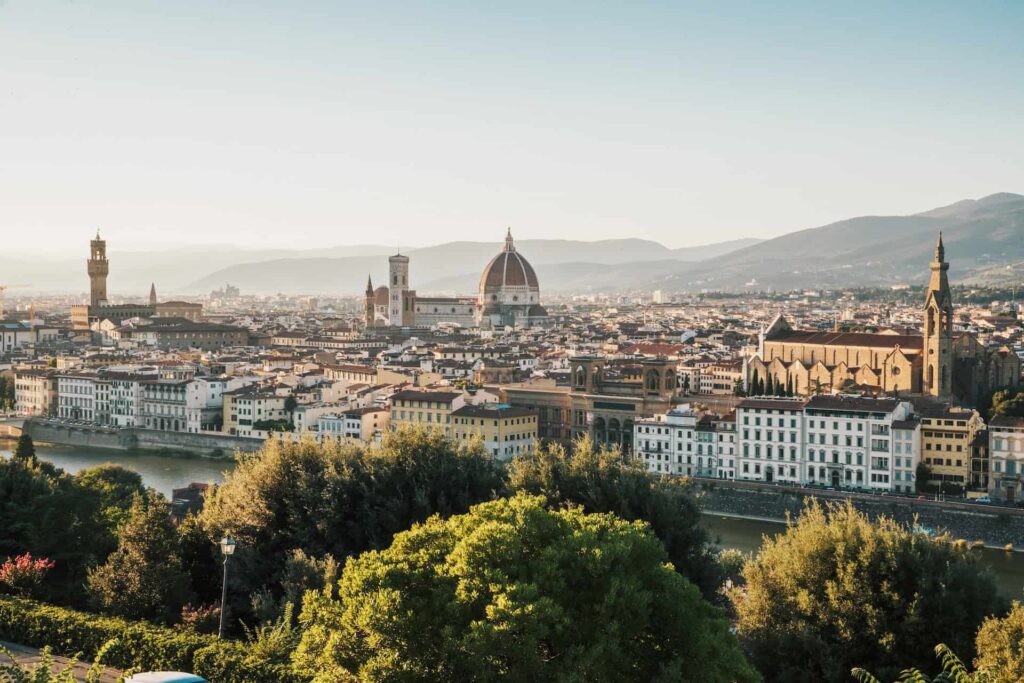


Those who come to Florence for the first time organize their visit around the usual ones:: the Duomo, the Uffizi, Ponte Vecchio, the Accademia for the David. Don’t get me wrong. They are and always will be the right steps!
However, Along the path that connects them, on facades photographed by thousands every day, there are details that almost no one notices because no one has ever told them to look. A Florentine walks past them without thinking, but if someone asks why that stone is worn in a specific spot or what that figure carved in a corner represents, the answer is always there.
It’s another way to explore the same historic center: it doesn’t add any additional stops, but adds a further, free level of reading to what’s already being done.
A bull with horns tells of a betrayal on the side of the Duomo
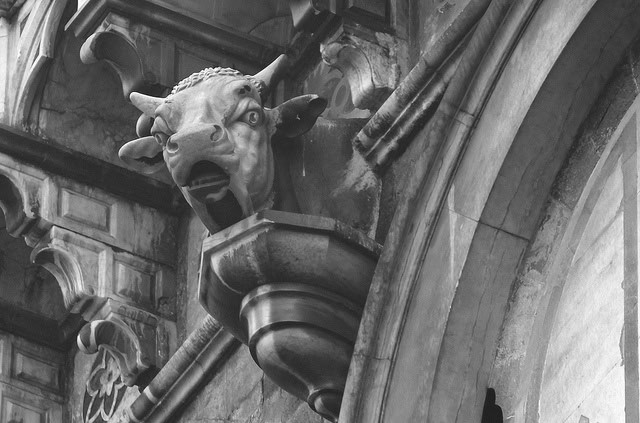
On the side of the Duomo towards Via del Proconsolo, if you search well you find a small bull carved in marble, with clearly visible horns. It is not just any decorative element: popular tradition links it to a story of horns… in every sense!
It is said that a master builder or stonemason working on the cathedral discovered that his wife was cheating on him with a church canon, and that he carved that bull right there, facing the clergy, as a silent and permanent revenge.
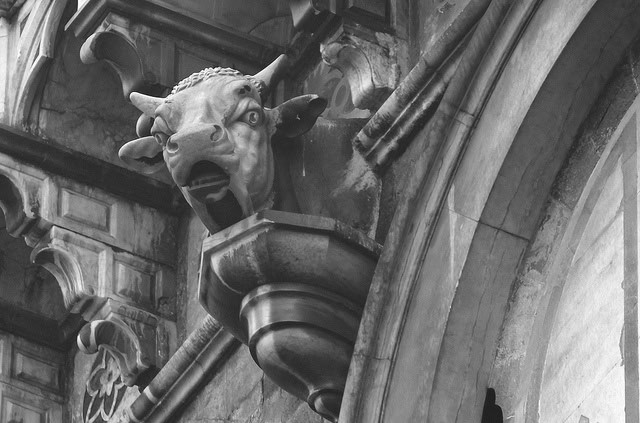
There are no documents to confirm the story, but that makes it a legend in the full sense of the word: no one can say with certainty who sculpted it or when, but the bull has remained in its place for centuries and with it the story that accompanies it.
A column in Piazza San Giovanni recalls an elm tree in bloom in midwinter.
In front of the Baptistery, in Piazza San Giovanni, there is a column that almost no one stops to look at, positioned as an among the traffic of visitors heading to the entrance.
It marks an episode that agiographic tradition attributes to Saint Zenobius, the first bishop of Florence: in 429, while his relics were being transported to a new location, the funeral procession stopped to lean against a dry elm tree, which would soon sprout buds and leaves in the heart of winter.
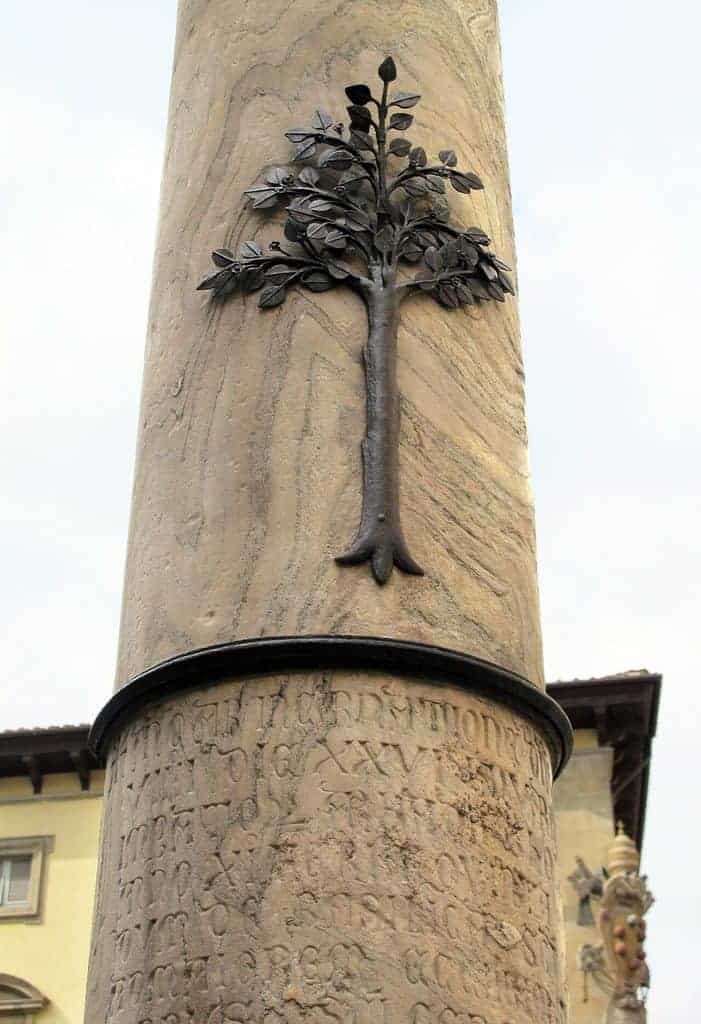
The miracle of the flowering elm has become one of the founding stories of the cult of the saint in the city and is the reason why that column, isolated and inconspicuous, has been there for centuries to mark a point that for the Florentines will never be a beany point.
The tower of Palazzo Vecchio is not at the centre of the facade for a specific reason
Looking at Palazzo Vecchio from Piazza della Signoria you will notice, if you pay attention, that Arnolfo’s tower is not centred with respect to the body of the building, but moved a little towards right. This isn’t a design error: when the palace was built, at the end of the 13th century, the tower was erected on the foundations of a pre-existing structure, the Torre della Vacca, which had belonged to the Ghibelline Foraboschi family.
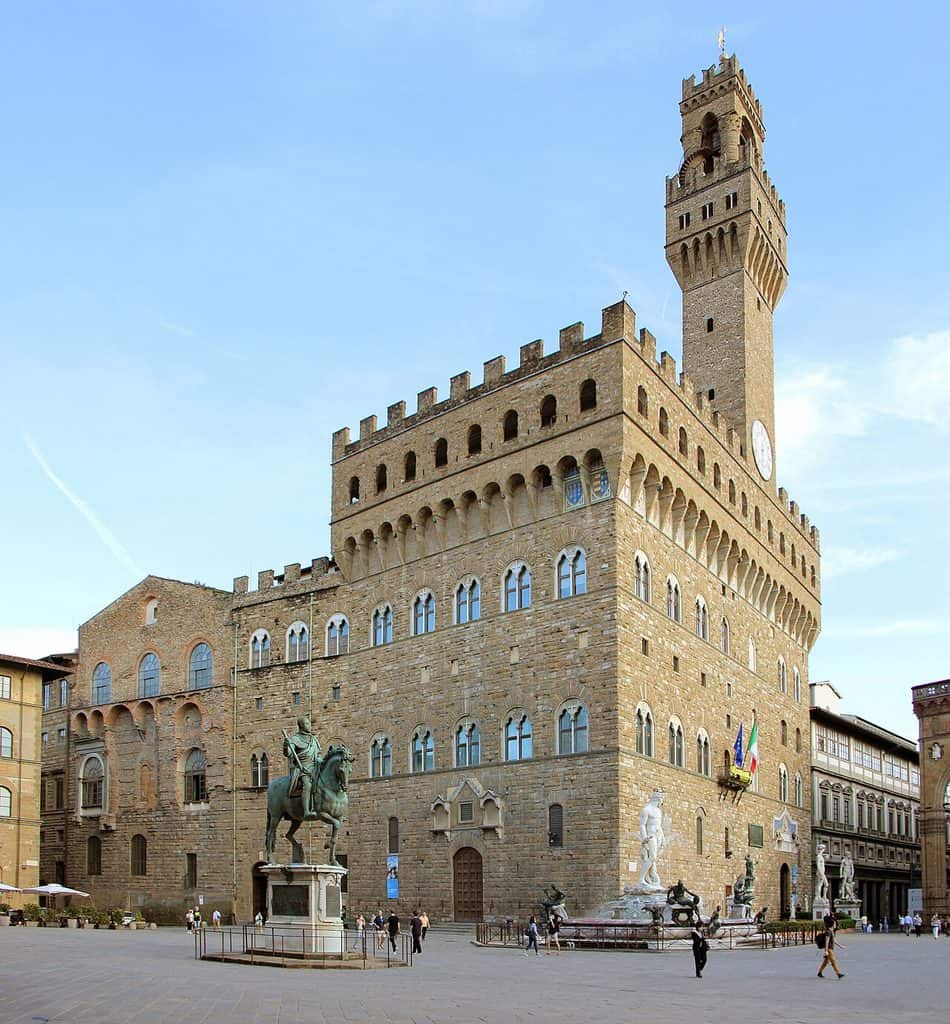
After the Guelph victory, the family’s homes were demolished, and the land on which they stood was long considered unsuitable for the new town hall. Reusing the already solid foundations of the old tower solved a concrete technical problem, but popular tradition over time added a more superstitious meaning to the move, viewing it as a way to keep the new municipal power away from a place deemed inauspicious.
Palazzo Vecchio, moreover, hides other similar details along its façade: a few steps from the tower, on the Via della Ninna side, is the profile carved in stone known as the Importuno, which tradition attributes to Michelangelo. I’ve discussed it in detail, along with other curiosities of the area, in Curiosities you can see in Florence, area by area.
Cellini hid in the nape of his Perseus’ neck
Beneath the Loggia dei Lanzi, next to Palazzo Vecchio, Benvenuto Cellini’s Perseus holds the severed head of Medusa with an outstretched arm, in one of the most photographed poses in Piazza della Signoria.
What it could easily escape you, because it requires you to turn around the statue and look up, is a small detail on the nape of Perseus’ helmet: a miniature bearded face, identified by art historians as a self-portrait of Cellini himself.
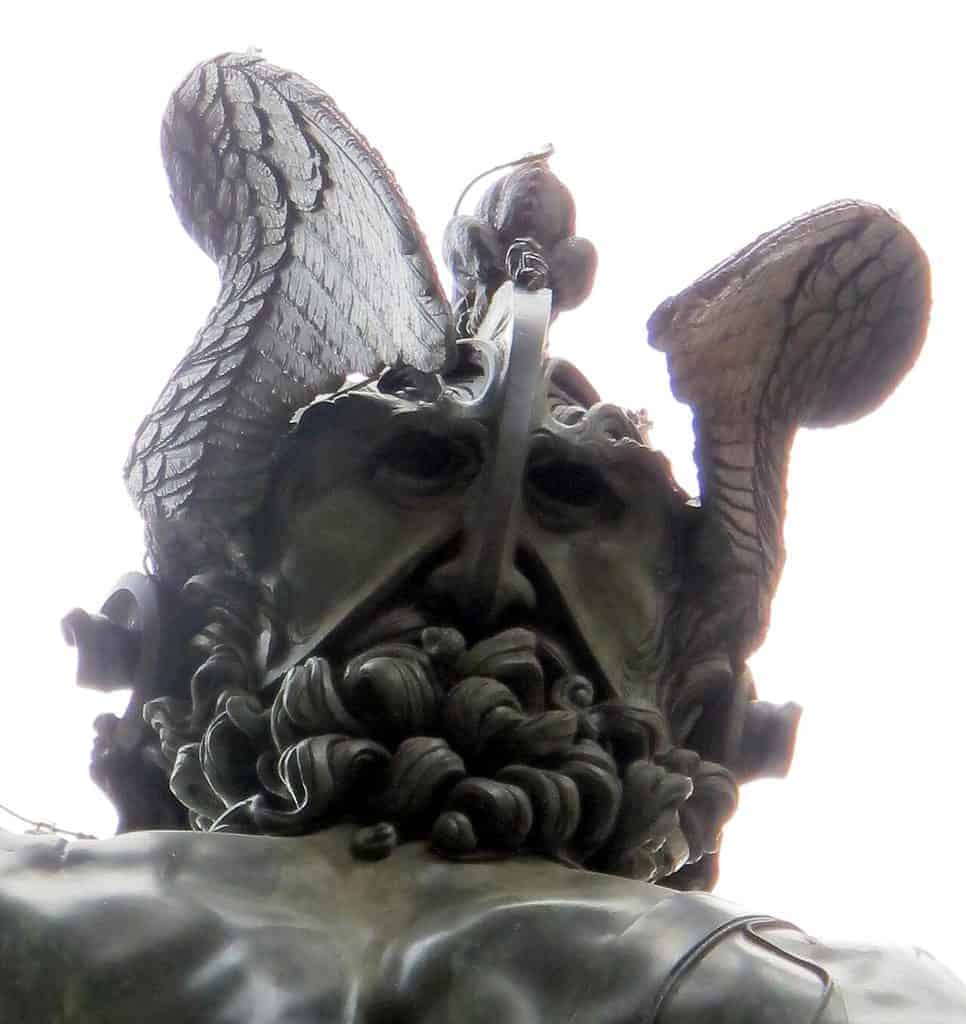
This is not a legend but a documented fact: Renaissance sculptors rarely signed their works explicitly, and hiding one’s face in a place that almost no one would notice was a discreet way to claim authorship of the work, reserved for those who bothered to look closely.
A small ritual is still practiced under the Loggia del Mercato Nuovo
Descending towards the Arno, between Piazza della Signoria and Ponte Vecchio, you pass under the Loggia del Mercato Nuovo, where a bronze statue of a wild boar, known to all as the Porcellino, attracts queues of people every day who nuzzle it and drop a coin into its jaws.
It’s a gesture that has been passed down through generations, linked to a specific legend about the return to Florence, and to a history of the statue itself that is longer and more intertwined with the city than it seems at first glance. I’ve told it in full inThe Porcellino Fountain in Florence…including why that animal isn’t a pig at all.
The floor of San Miniato al Monte hides a marble zodiac.
If you have an extra hour available and not a climb doesn’t scare you, you can walk away from the center and arrive at San Miniato al Monte, one of the oldest churches in Florence, overlooking the city from one of the surrounding hills.
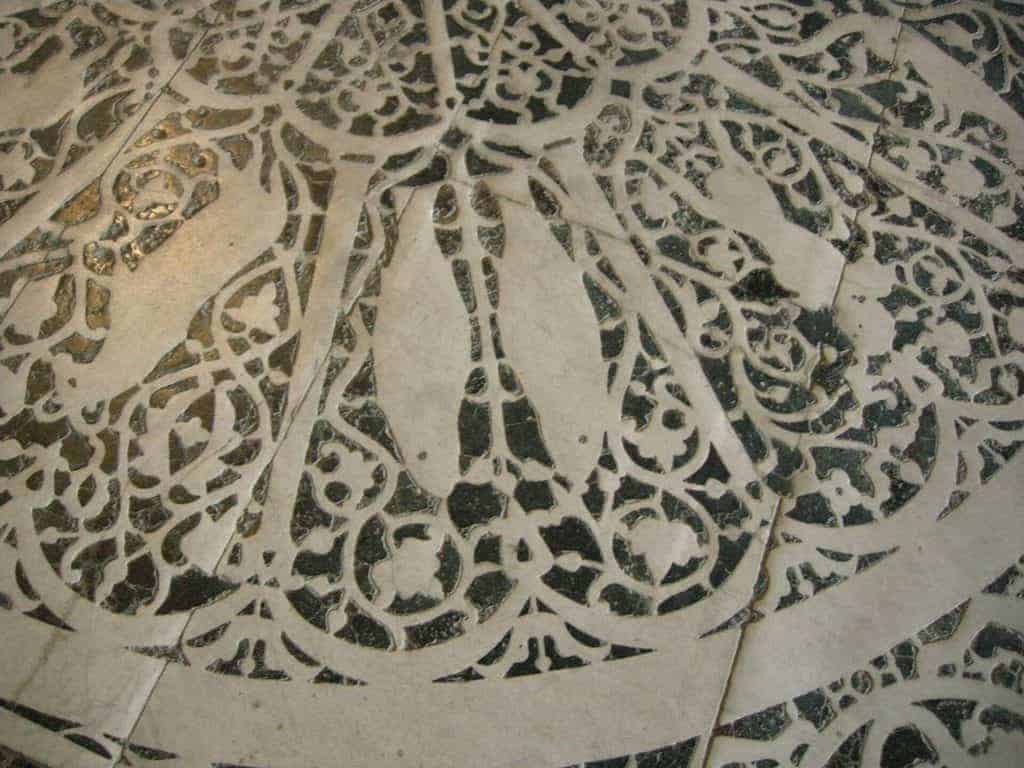
In the nave, inlaid into the marble floor, is a zodiac dating back to 1207: a white and green marble disk with the symbols of the twelve signs arranged in a circle, unique of its kind among Florentine churches.
Historians disagree on its original function: some link it to the calculation of the date of the patron saint’s day, while others hypothesize a more strictly astrological use, linked to the civil calendar of the medieval city.
Neither reading has ever been definitively confirmed, and this very uncertainty is part of what makes the pavement of San Miniato one of the city’s least-told curiosities.
The bees carved on the pedestal of Ferdinand I have a precise meaning
Returning towards the centre, in Piazza della Santissima Annunziata, the equestrian statue of Ferdinando I de’ Medici, begun by Giambologna and completed by Pietro Tacca in the early seventeenth century, hides a detail that escapes one’s gaze if alone in front.
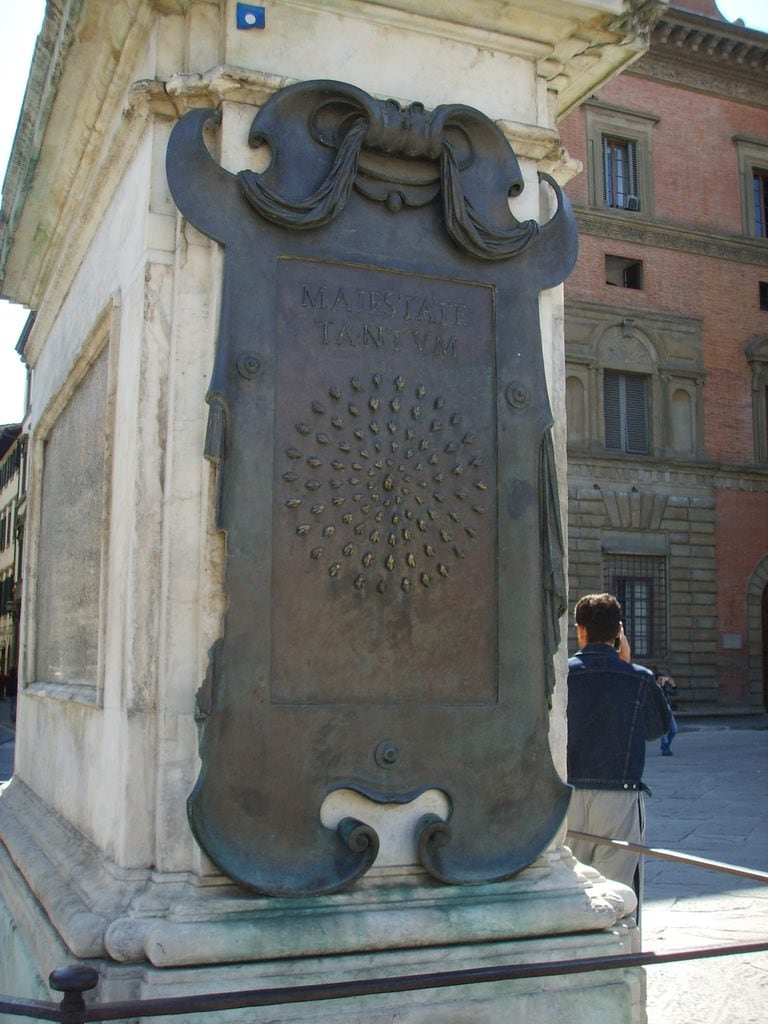
On the back of the pedestal, a swarm of bees is carved, arranged in concentric circles that thicken toward the center, becoming impossible to count precisely. In the iconography of the time, bees were associated with the prince’s industriousness and good governance. Their disposal in a spiral and designed specifically so that the eye cannot stop on a specific number. A little visual invention that is worth to eye when you find yourself in front of the statue.
These are some of the legends and curiosities of Florence less known to non-Florentines. If you’re also interested in more mysterious and dark stories, read the post on The haunted places of Florence!