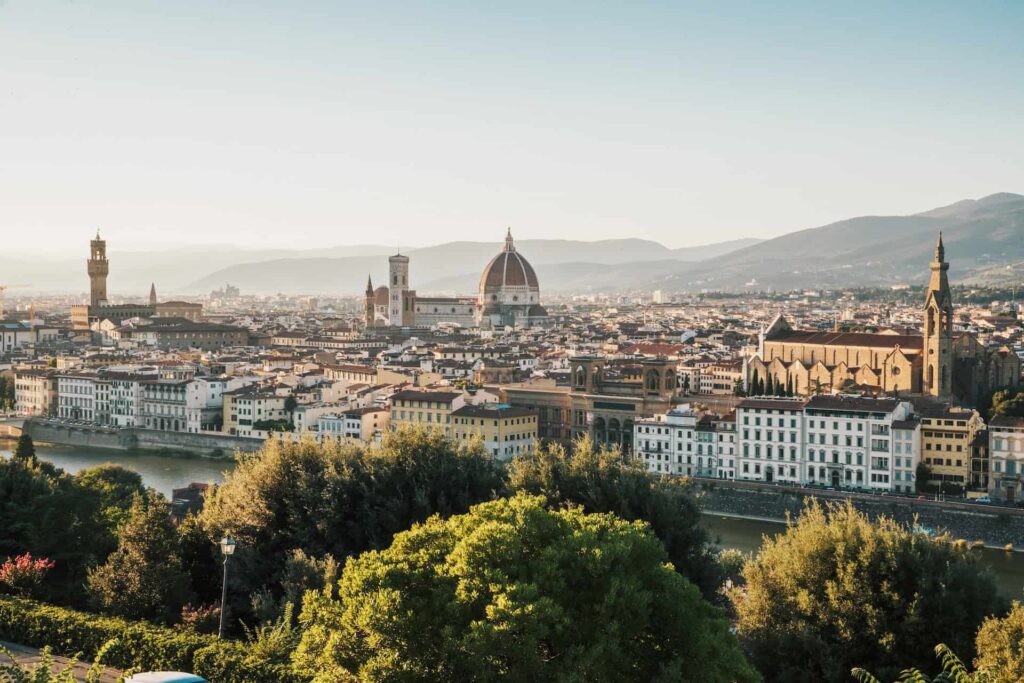


Florence is full of famous places, but it doesn’t end with the monuments everyone knows. The city center also boasts palaces, churches, and squares that carry with them stories far stranger than expected.
Some are based on real events. Others are legends that have stuck to the places and have never gone away. The great thing is that many of these places aren’t hidden at all: you pass them on a walk and maybe you don’t even notice them!
If you’re curious about Florence’s haunted places, the question isn’t whether you believe in ghosts or not. The point is that the city truly does have corners linked to murders, apparitions, windows that are always open, and details that, once noticed, you never look at the same way again.
Palazzo Vecchio and the ghost of Baldaccio d’Anghiari
If there is one place to start, it isBuilding OldIt is one of the symbols of Florence and has been linked to the city’s government for more than seven centuries, so it’s no surprise that disturbing stories have also arisen around its halls.
The most famous legend is that of Baldaccio of Anghiari, leader of the fifteenth century. Baldaccio was killed in Palazzo Vecchio onSeptember 6, 1441, after being summoned there under a pretext by Gonfaloniere Bartolomeo Orlandini. Historical sources agree that he was murdered in the palace; the best-known versions of the story also say that his body was thrown out a window and then dragged into the square.

This is where the most famous part of the story comes from: according to tradition, her ghost continues to haunt the palace’s corridors and rooms. It’s one of those Florentine legends that often recur, even today, when discussing haunted places in the city.
Palazzo Vecchio, then, is not a difficult place to find! It’s in Piazza della Signoria, in the heart of the city, plain for all to see. Precisely for this reason, Baldaccio’s story is even more striking: behind one of Florence’s most famous buildings lies a violent episode that continues to fuel stories and presences.
Palazzo Budini-Gattai and the always-open window
Among the most famous stories linked to the haunted places of Florence is that of Budini-Gattai Palace, in Holy Annunciation Square. Even if you don’t know the name of the building, you’ve probably already passed by it: it’s located in one of the most elegant squares in the center and hides a peculiarity that Florentines have noticed for generations.
The peculiarity is a window on the main floor that, according to tradition, is never closed. The reason is said to be linked to the legend of a woman who lived in the building and one day saw her husband leave from that window, promising to return. She waited for him for years, always in the same spot, until she died without ever seeing him again.
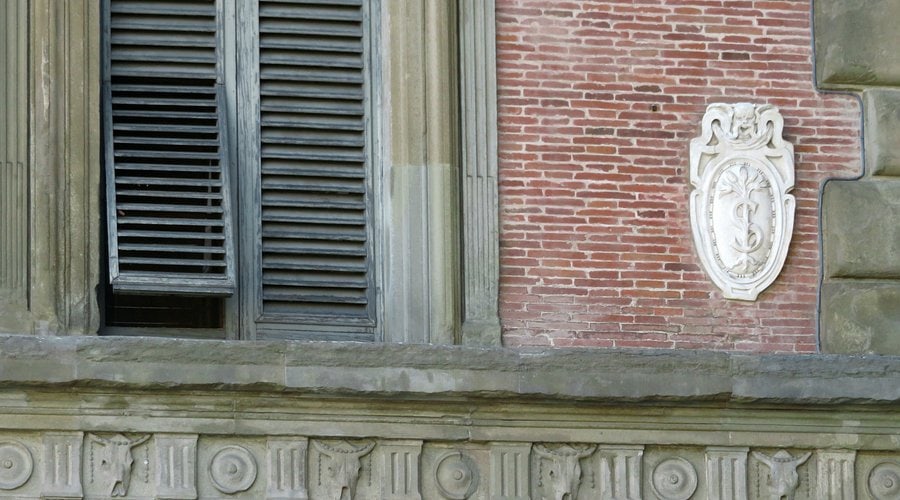
This is where the most famous tale comes from: after his death, every time someone tried to close that window, something strange would happen. For this reason, over time, it was decided to leave it open. It’s not easy to say where the story ends and the legend begins, but that’s precisely why the building continues to be cited whenever ghosts and presences are discussed in Florence.
Here too, we’re talking about a busy, bright square, bustling with people and passing through. Yet, just looking up at that window is enough to understand why this story has remained so imprinted on the city’s imagination.
Santa Maria Maggiore and the stone head of Berta
Another place that often appears in the stories of “Gothic Florence” is Saint Mary Major, a stone’s throw from Piazza del Duomo. It’s a church that many people visit almost by chance, perhaps while wandering from one street to another in the center, but there’s a detail on its façade that’s hard to miss when someone points it out.
This is the so-called Berta’s head, a stone face walled into the exterior of the building. Various stories have sprung up around this figure, and this interweaving of versions is part of its charm. In one of the best-known, Berta is a woman who remained petrified after witnessing an exceptional event without showing any reaction. In other versions, however, the face is linked to various episodes, always with a hint of condemnation or a disturbing presence.
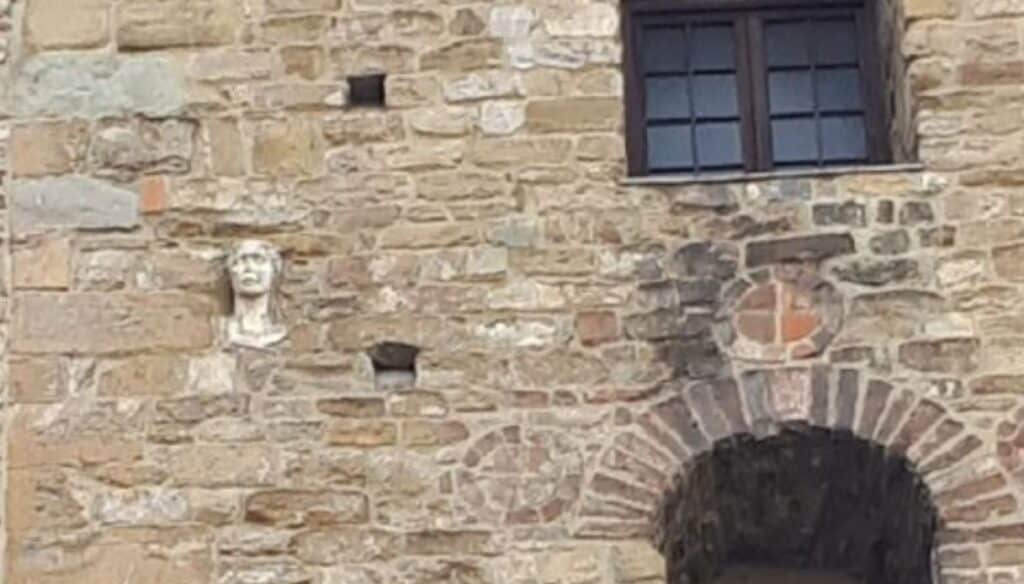
This is one of those details that transform a perfectly ordinary place into something that sticks in your mind. Until a moment ago, you’re simply walking downtown; then you look up, see that face embedded in the wall, and begin to wonder how long it’s been there and why it continues to be remembered.
Another tiny detail, almost hidden within the urban landscape.
Bianca Cappello’s Shadow at Palazzo Pitti
Among the figures that most often appear in the darkest stories of Florence there is also Bianca Cappello, second wife of Francesco I de’ Medici. Hers is one of those stories where history and legend easily intertwine: court intrigue, a scandalous affair for the time, the sudden death of herself and her husband. It’s no surprise that stories of apparitions have also sprung up around her name.
One of the places it is most often linked to is Pitti Palace, one of the city’s most famous palaces, and one that has been closely linked to the life of the Medici family for centuries. According to tradition, Bianca continues to be heard there, like a presence clinging to the court. Some versions speak of rooms where her ghost has repeatedly appeared; others simply speak of a shadow that continues to return each time the Florentine mysteries are told.
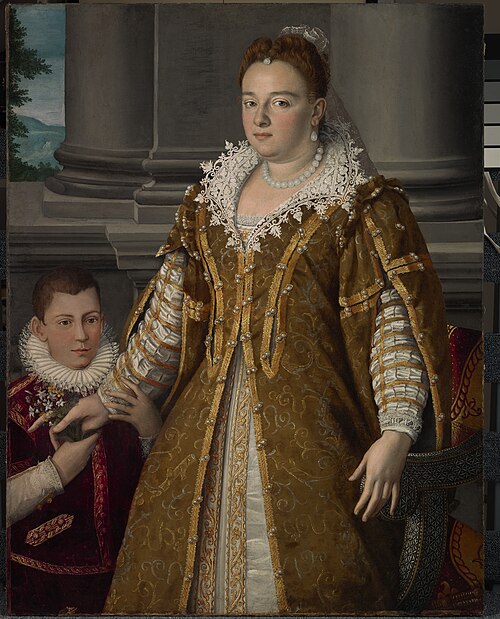
Today, Palazzo Pitti is one of the symbols of monumental, orderly, almost solemn Florence. Knowing that tales of apparitions continue to circulate around such a space changes the way you look at it a bit, don’t you think?
The Ghost of Anna Maria Luisa de’ Medici at Villa La Petraia
Anna Maria Luisa de’ Medici, the Electress Palatine, is another figure who often appears in ghost stories related to Florence. She is remembered above all for the fundamental role she played in bequeathing the Medici artistic heritage to the city, but more disturbing tales have also grown around her name. One of the residences with which she is most often associated is Villa La Petraia, on the hills north of Florence.

According to tradition, her presence continues to be felt right there. Versions vary, as often happens with these types of tales: in some cases, they speak of apparitions, in others of a figure still perceived as connected to the villa’s rooms. It’s not as famous a legend as the one about the window of Palazzo Budini-Gattai, but it comes up with some regularity when listing the most mysterious places in the city and its surroundings.
Anna Maria Luisa, moreover, is not a fictional figure, but a true protagonist of Florentine history. This makes the legend stronger, because it begins with a very concrete historical presence and then shifts to a different level, that of memory that becomes story, consigning Villa La Petraia to history.
The profile engraved on the wall of Palazzo Vecchio
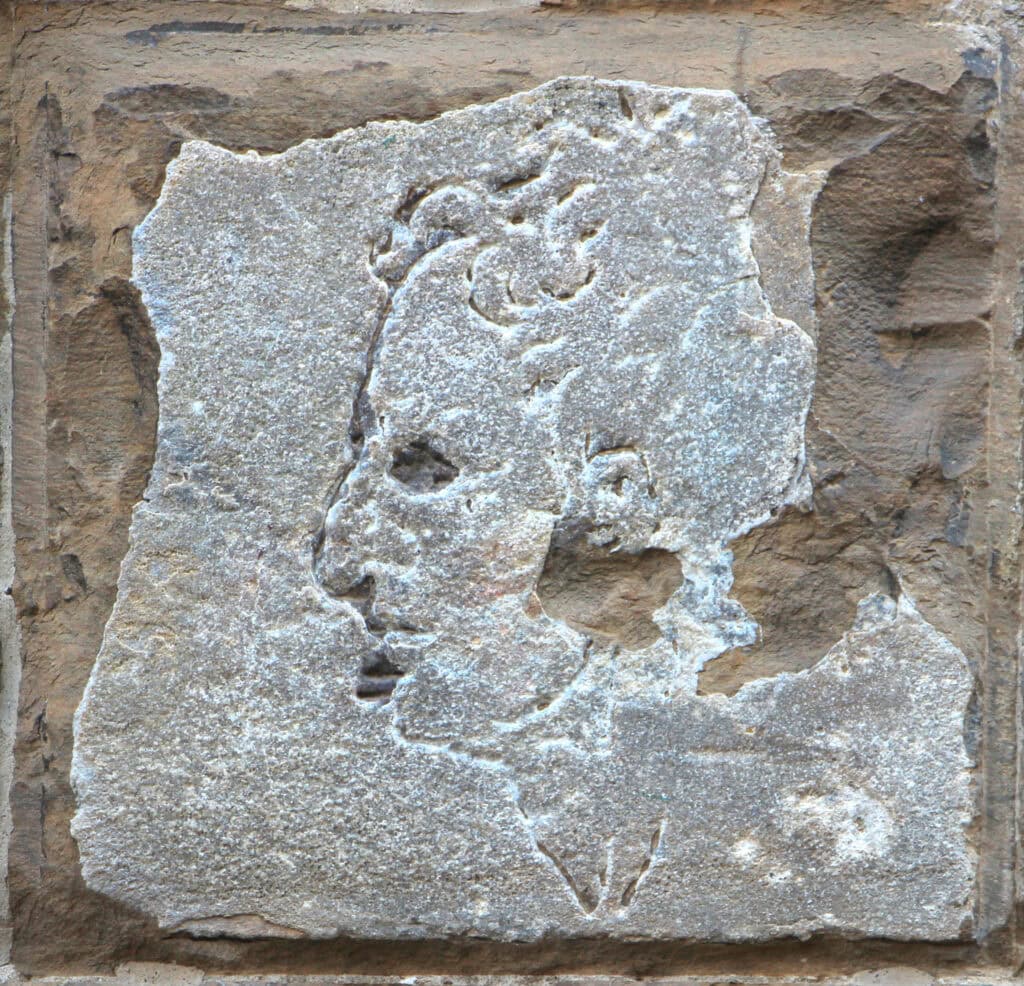
We complete the tour by returning to the origins. Near the entrance of Old PalaceThere is also another detail that is much less known than the story of Baldaccio, but which fits well into this stranger side of the city: a small human profile engraved in stoneThe most famous legend attributes it to Michelangelo, who would have sculpted it absentmindedly while talking to someone, without even looking at the wall.
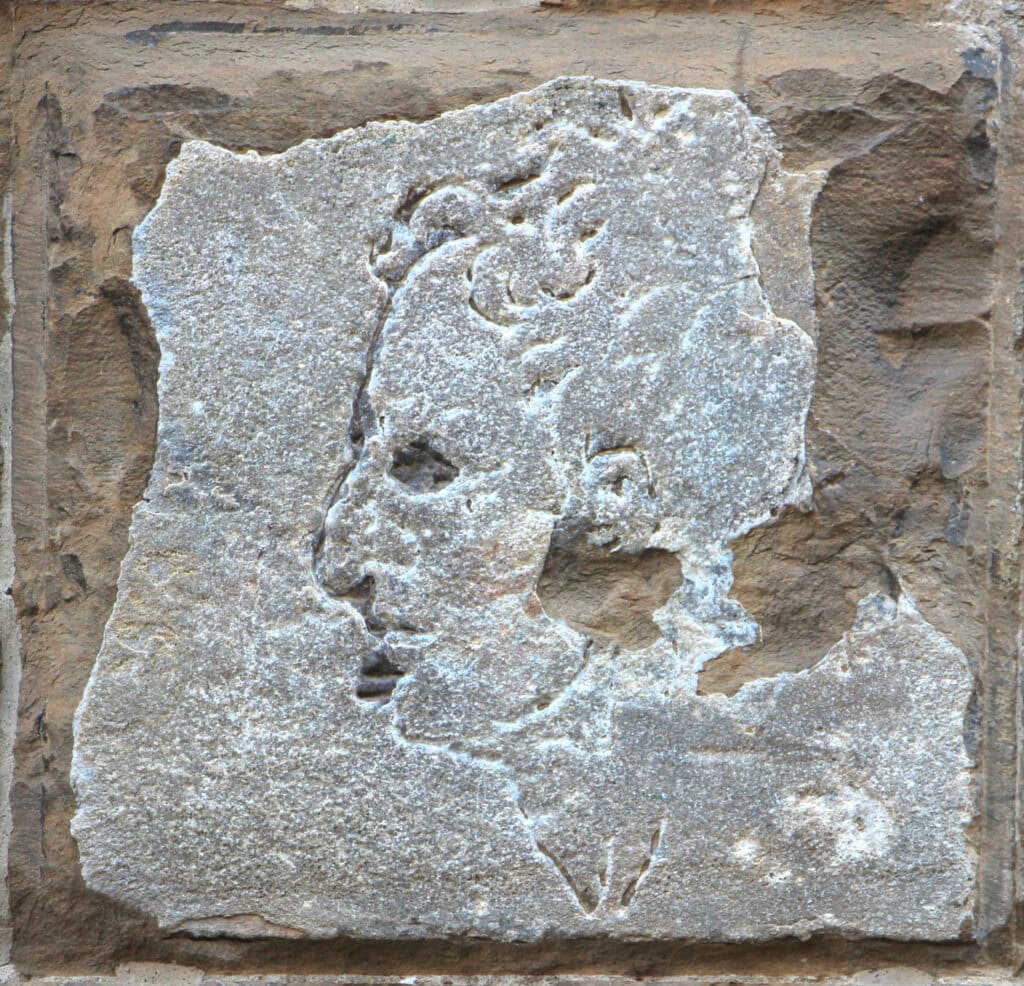
It’s not a ghost story in the strictest sense, but it works well within the same imagination. Also because that face, so simple and out of place, has something inexplicable: it’s there, in plain sight, yet it easily goes unnoticed until someone points it out. From that moment on, it becomes one of those details that stays with you.
Is it worth looking for haunted places in Florence?
Very simple answer: yes!
Especially if you like the idea of seeing the city from a slightly different perspective than usual. Stories, legends, and tales add an extra layer to places you’d otherwise simply consider as monuments, churches, or historic buildings.
What makes them interesting is that these stories do not live outside the city, but within its way of being remembered and told.
Then there’s another aspect that shouldn’t be underestimated. Many of these places are located along very common routes, in areas where visitors to Florence almost always pass. Including them in a stroll changes the pace at which you observe your surroundings. It makes you look more closely at a facade, a window, a detail on a wall, and wonder how many stories can remain attached to a place for centuries.