

A kilometer and a half, more or less. That’s the walking distance between Santa Maria Novella station and Ponte Vecchio, passing by the Duomo and Piazza della Signoria. Almost everything that comes to mind when you think of Florence lies along this route, which is why a single day, if you plan it well, is enough to take the city home with you.
I’ve been a guide in Florence for years, and the one-day tour is the one I’m asked for most often, especially by people who arrive by train in the morning and leave in the evening. Here’s the itinerary I recommend. It’s entirely on foot: it starts at the station and ends at Piazzale Michelangelo, with the whole city spread out in front of you.
If you’re still deciding how long to stay, I’ve also written an article on How many days do you need to visit Florence? Here we’re assuming you only have one day, and we’re going to make the most of it.
Before you set off, choose just one museum
In one day in Florence there’s room for one big museum, and only one. If you squeeze in two, you’ll see the second one tired and rush through the rest of the city.
The choice is usually between two Florentine classics. At the Uffizi Gallery you need at least two and a half hours to enjoy Botticelli, Leonardo, Michelangelo and Caravaggio. The Accademia Gallery takes about an hour and is the museum of the David: if you came for him, you’ve obviously already made your choice.
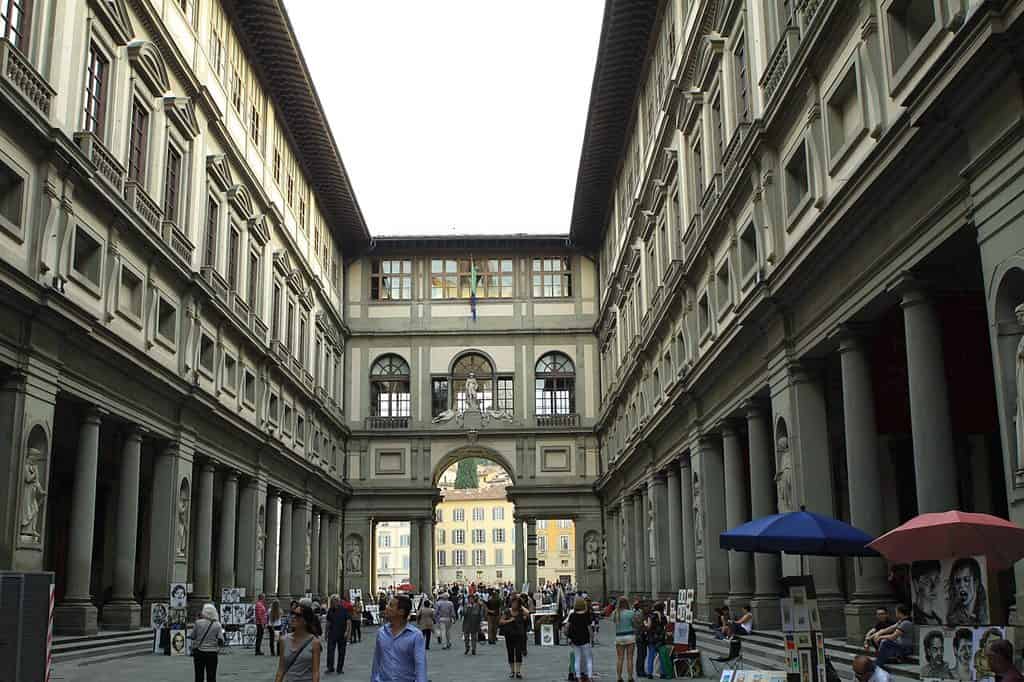
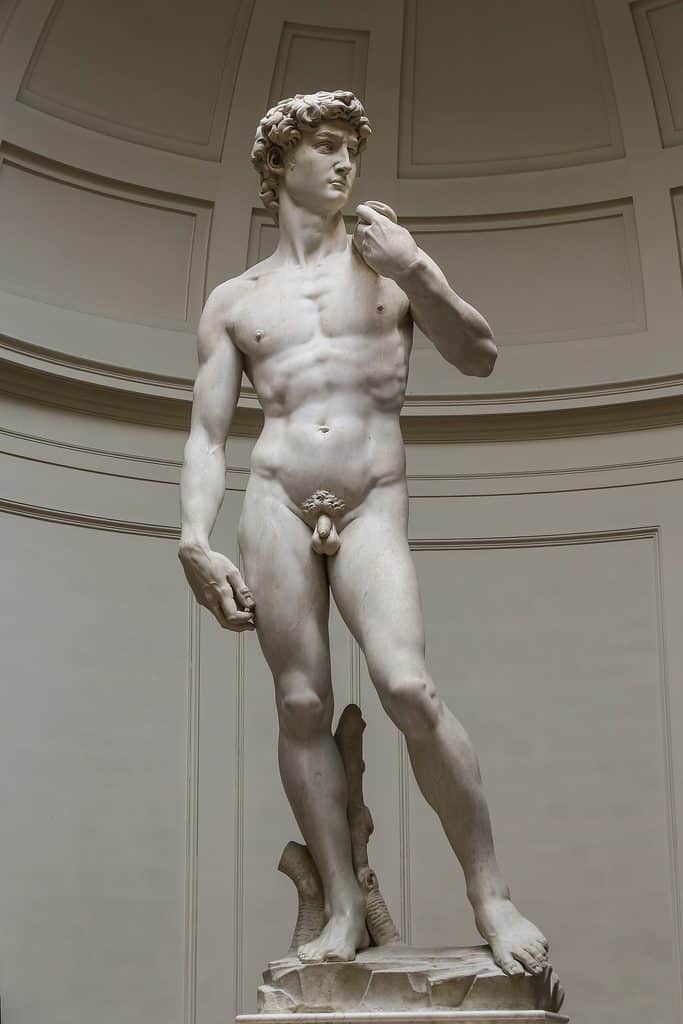
Either way, book a timed entry, because in the busiest months the line without a reservation can last longer than the visit itself. Also remember that both museums are closed on Mondays. If your day in Florence falls on a Monday, climb Giotto’s Bell Tower or the Dome instead.
If you only have one day, I almost always recommend the Accademia. It leaves you more free time for walking, and on this itinerary it’s the walk that makes the day.
The morning starts at Santa Maria Novella
If you arrive by train, the first stop is right in front of you as soon as you leave the station. Cross the square and head towards the Basilica of Santa Maria Novella: its white and green marble facade is the one you can see from a distance, and it’s one of the best ways to enter the city.
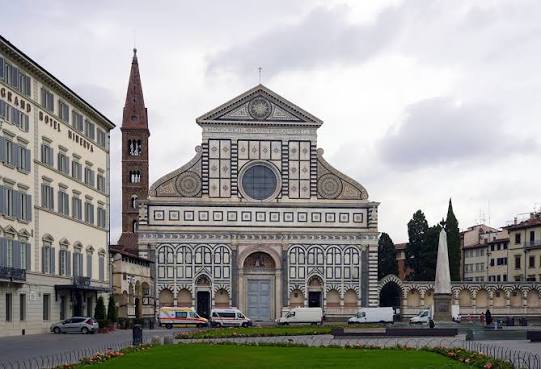
The facade of the basilica is the work of Leon Battista Alberti
The lower part of the facade is Gothic, while the upper part was designed by Leon Battista Alberti and completed in 1470. It was commissioned by Giovanni Rucellai, an extremely wealthy merchant, who had his name written in large letters beneath the pediment. If you look up, you can still read it today, in Latin, far more prominent than any saint’s!
Inside you’ll find Masaccio’s Holy Trinity and Giotto’s Crucifix. There’s an entrance fee. When I only have one day, I usually stop at the facade and the outer cloister.
The Dominican friars’ pharmacy is just a few steps away
On Via della Scala, around the corner from the basilica, is the Officina Profumo-Farmaceutica di Santa Maria Novella. The Dominican friars of the convent were already preparing herbs, ointments and essences here in the 13th century, and in 1612 the pharmacy officially opened to the public.
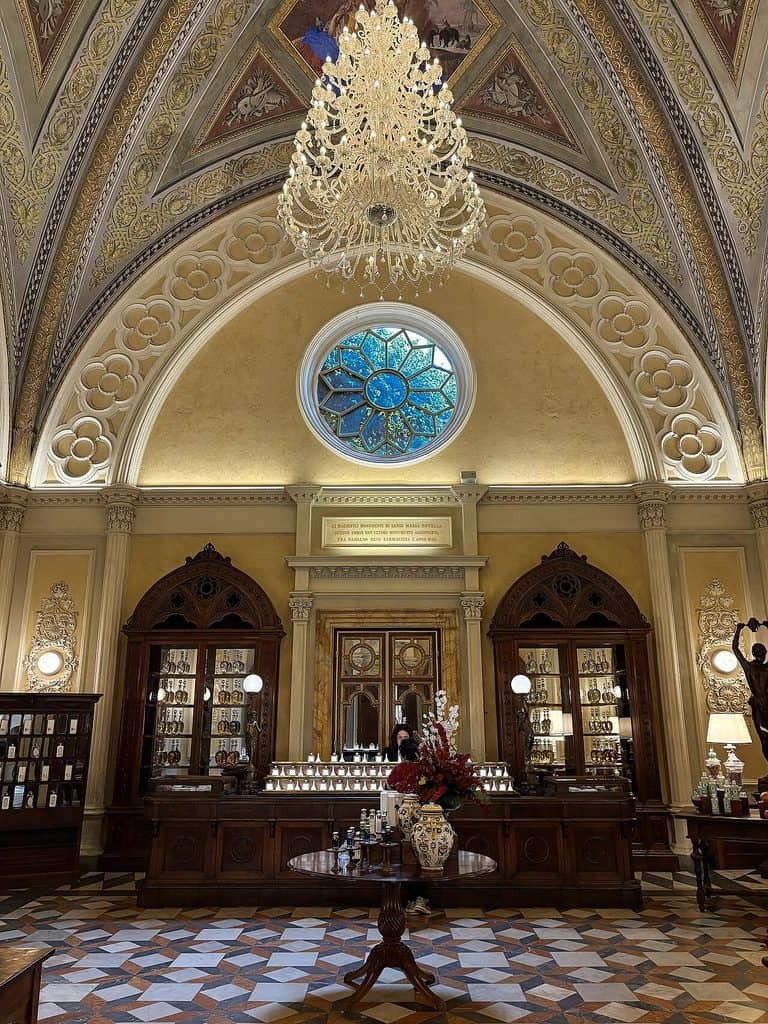
Entry is free, and the historic rooms, with their wooden shelves and frescoed ceilings, are worth ten minutes even if you don’t buy anything.
San Lorenzo is the Medici neighborhood
From the station it’s just a five-minute walk to Piazza San Lorenzo. The basilica has a rough stone facade that was never finished: Michelangelo drew up a design for it, but work never began. It was the Medici family church, and the Medici are buried here, in the Medici Chapels at the back.
All around are leather stalls and, a little further on, the Mercato Centrale, a large 19th-century iron and glass building. On the ground floor you’ll find the meat, vegetable and cheese stalls where Florentines do their shopping. The upper floor is full of food stalls, and if you pass by mid-morning, it’s the perfect place for a coffee.
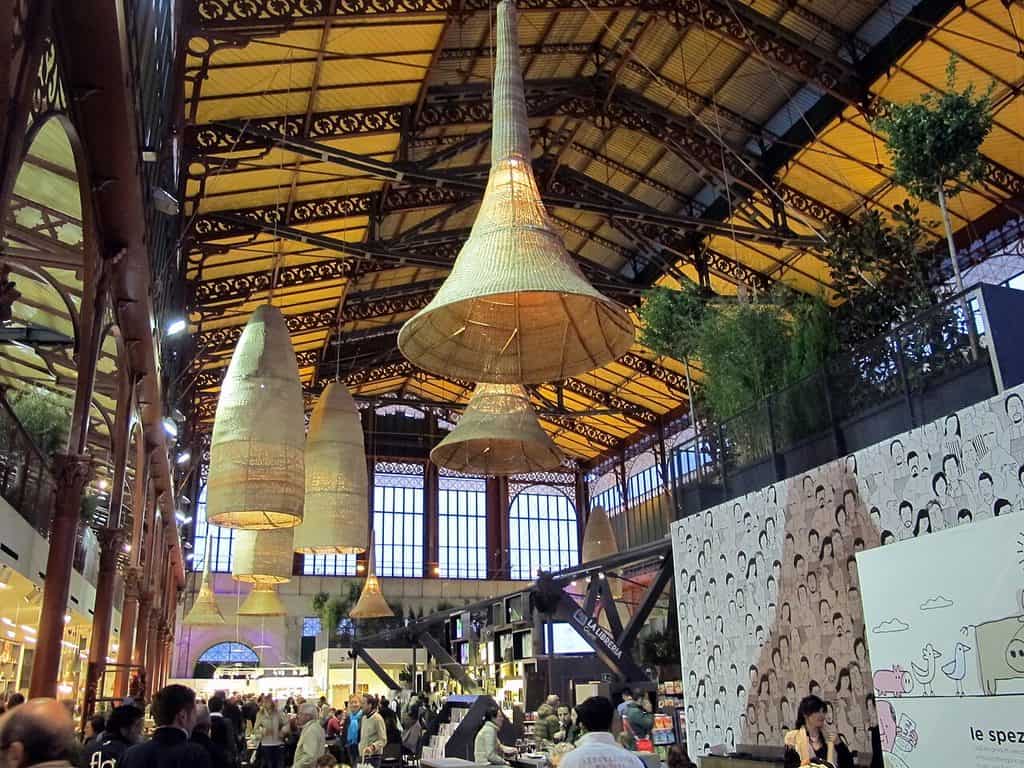
If you’ve chosen the Accademia, now’s the time to go! From San Lorenzo it’s a five-minute walk along Via Ricasoli, so it’s best to book your entry for mid-morning and then head back towards the Duomo.
In Piazza del Duomo you decide whether to climb
From San Lorenzo, or from the Accademia, you’ll reach Piazza del Duomo in a few minutes. Here three monuments stand side by side: the Cathedral of Santa Maria del Fiore with Brunelleschi’s Dome, Giotto’s Bell Tower and the Baptistery of San Giovanni. On the side of the Baptistery facing the cathedral are Lorenzo Ghiberti’s Gates of Paradise. What you see is a copy (the original is in the Museo dell’Opera del Duomo), but the gilded panels are still perfectly easy to read.
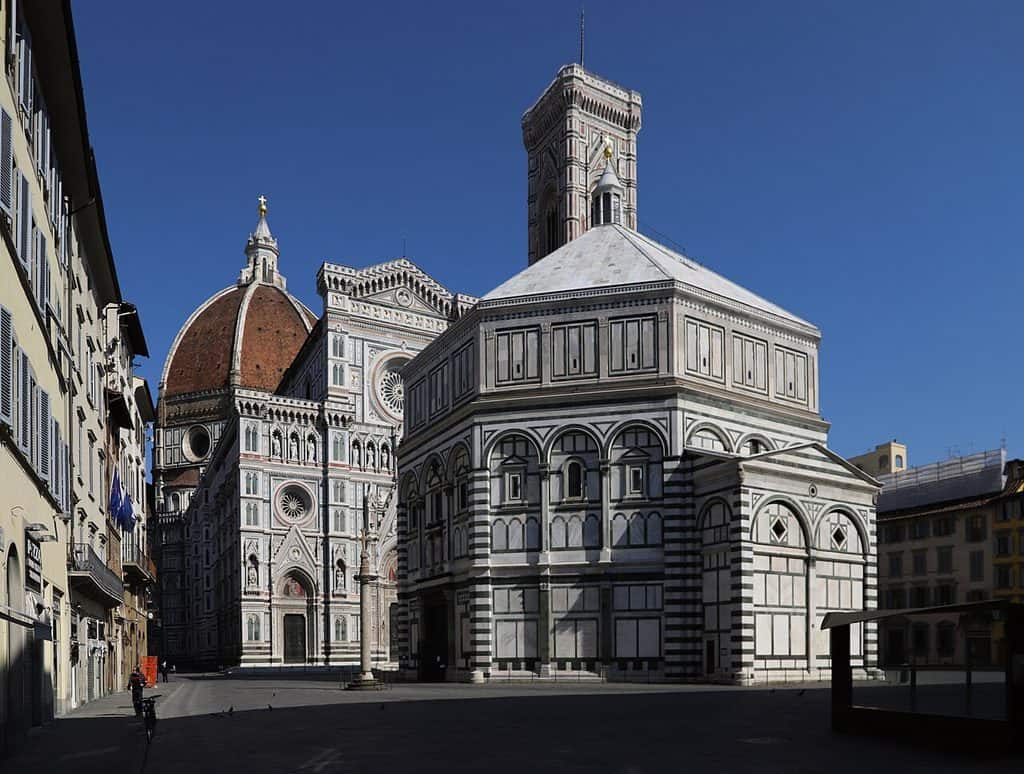
Entering the cathedral is free, although there’s often a line. What’s left to decide is whether to climb up. The Dome has 463 steps and you need to book a specific time slot. The Bell Tower has 414 steps, there’s usually a shorter wait, and from the top you can see the Dome up close, which is something you can’t do from the Dome itself.
With just one day, pick one of the two, or neither if you already have a museum planned. I prefer the Bell Tower, and not just because it’s fifty steps fewer!
If you’re curious about the details almost nobody notices around here, I’ve collected some of them in Legends and hidden curiosities of Florence between the Duomo and the Uffizi.
Via dei Calzaiuoli takes you to Piazza della Signoria
From the Duomo, take Via dei Calzaiuoli, the pedestrian street that runs south. Its name comes from the hosiery makers’ workshops that once lined it. Today it’s a shopping street, but halfway along there’s a stop you shouldn’t skip.
Orsanmichele was a church and a granary at the same time
On your right, halfway down the street, is Orsanmichele, a squat, square building that doesn’t look like a church at all. It started out as a grain market and later became the church of the Arti, Florence’s trade guilds.
Each guild placed a statue of its patron saint in a niche on the outside walls, and they hired Donatello, Ghiberti and Verrocchio to make them. Walk around the building: it’s a small open-air sculpture museum, and completely free.
Piazza della Signoria is the city’s political heart
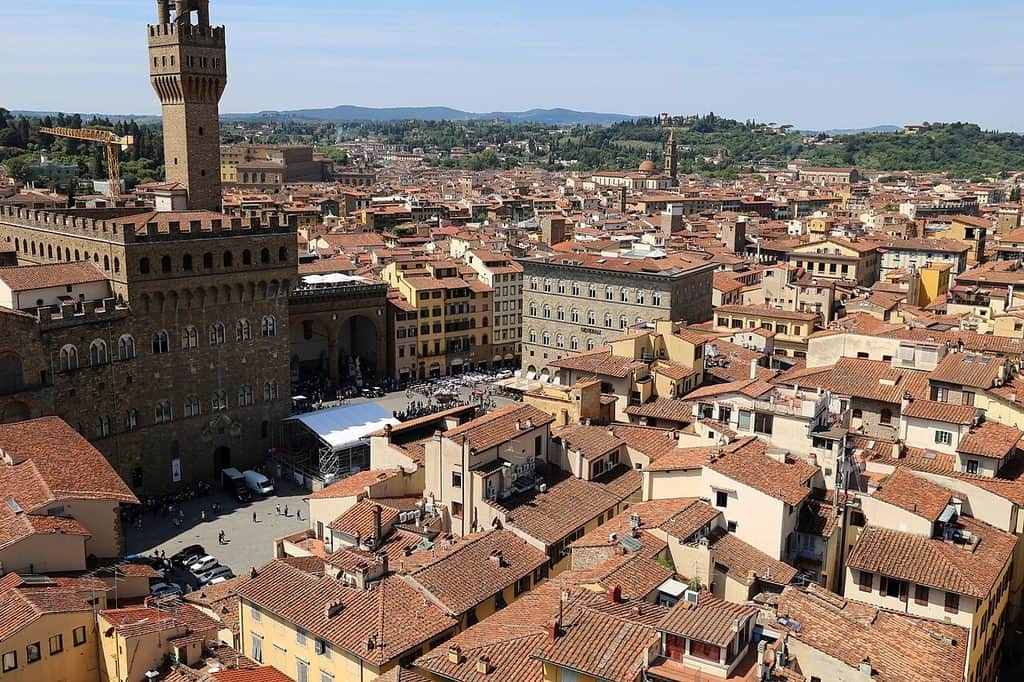
A few steps further on you come out into Piazza della Signoria, in front of Palazzo Vecchio, which is still Florence’s city hall today. The David at the entrance is a copy: the original stood here until 1873, when it was moved to the Accademia to protect it. Under the Loggia dei Lanzi you’ll find Benvenuto Cellini’s Perseus and Giambologna’s Rape of the Sabine Women, and here too you can see the statues up close without a ticket.
The entrance to the Uffizi is right next to the Loggia. If it’s your museum of the day, go in now and push lunch back to early afternoon.
Lunch is eaten standing up
With only one day, a long restaurant lunch costs you an hour and a half of the city. I suggest doing what many Florentines do and grabbing something quick and good.
Between Piazza della Signoria and the Mercato Nuovo there are several lampredotto stands. Lampredotto is a sandwich made with the fourth stomach of a cow, slow-cooked in broth and topped with salsa verde. If you’re not feeling brave, a schiacciata filled with Tuscan cured meats does the job just as well.
If you came through San Lorenzo, the upper floor of the Mercato Centrale is a good alternative, with lots of different stalls under one roof.
The afternoon goes by way of Ponte Vecchio
After lunch, head down towards the Arno. Along the way you’ll come across the Mercato Nuovo, the covered loggia where silk and fine fabrics were once traded.
The Porcellino is waiting for your coin
On one side of the loggia is the Porcellino fountain, a bronze boar with a gleaming snout. Tradition says you put a coin in its mouth and let it drop through the grate: if it falls in, you’ll come back to Florence.
Rubbing its nose brings good luck, and judging by the color of its snout, almost everyone believes it!
There have been goldsmiths on Ponte Vecchio since 1593
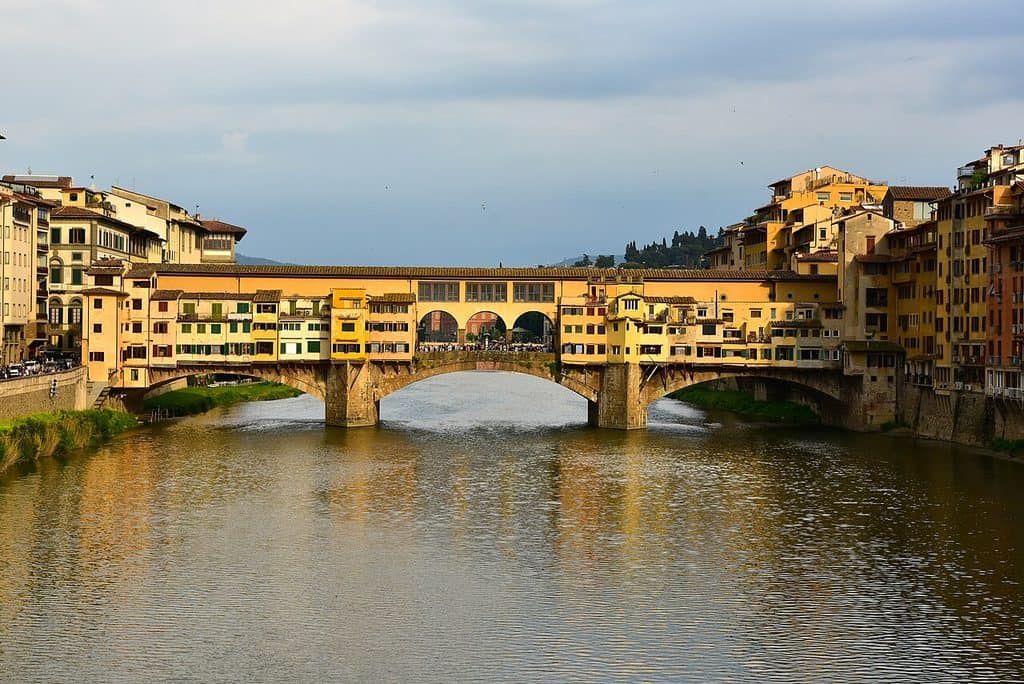
Two minutes later you’re on Ponte Vecchio. The shops on the bridge once belonged to butchers and tanners, who threw their waste straight into the Arno. In 1593 Grand Duke Ferdinando I evicted them and replaced them with goldsmiths and jewelers, who are still there today.
Above the shops runs the Vasari Corridor, the raised passageway that linked Palazzo Vecchio to Palazzo Pitti. If you like bridges, I’ve told the story of all the others in The bridges of Florence.
Once you’re across, you’re in the Oltrarno. With just one day you won’t have time for Palazzo Pitti, but you can turn left along Via de’ Bardi and walk towards the San Niccolò neighborhood, which is quieter and full of small bars.
Watch the sunset from Piazzale Michelangelo
From San Niccolò, the climb up to Piazzale Michelangelo begins. You can take the Rampe del Poggi, a series of stairways and paths through the greenery, or walk up from Porta San Miniato. Allow about twenty minutes at a gentle pace. If your legs give up, buses 12 and 13 go all the way to the top.
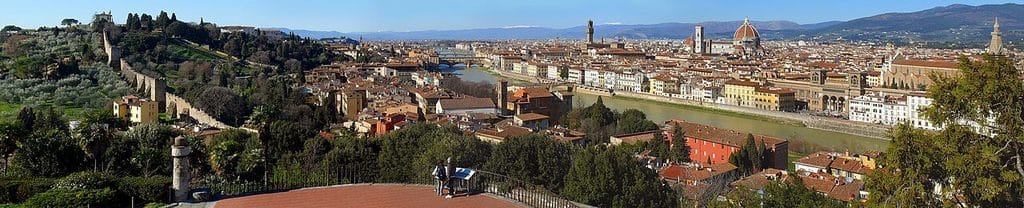
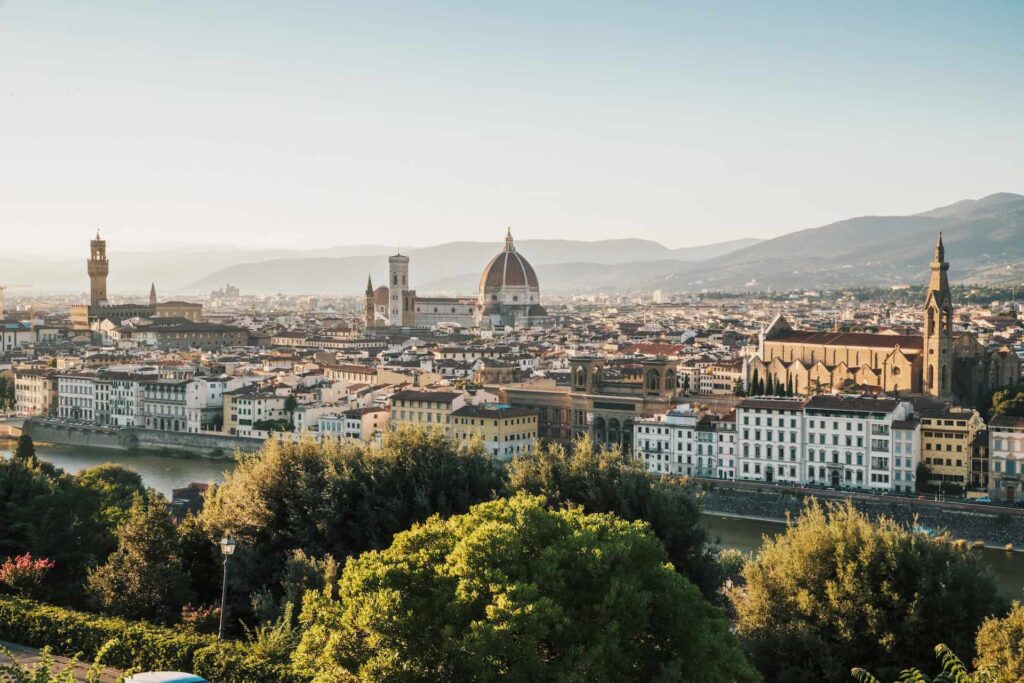
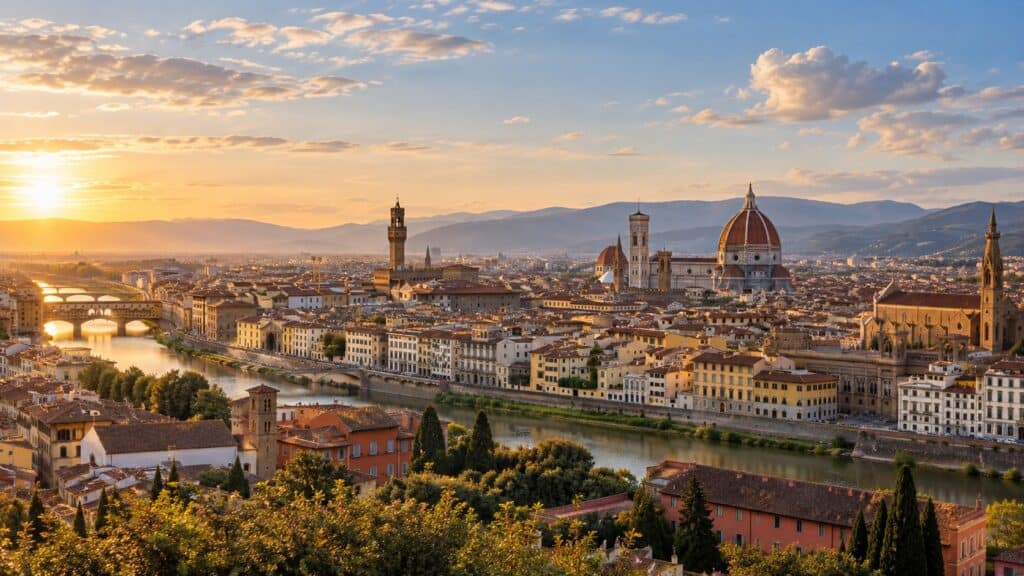
The piazzale was built between 1869 and 1876 by the architect Giuseppe Poggi, in the years when Florence was the capital of Italy. In the center stands another copy of the David, this one in bronze. From up here you can see everything you’ve walked through during the day: the station in the distance, the Dome, the tower of Palazzo Vecchio and Ponte Vecchio over the river. Get there a little before sunset, because the balustrade fills up fast.
If you still have some energy left, walk another five minutes uphill to the basilica of San Miniato al Monte. The view is the same, but with far fewer people.
With half a day, stick to the central stretch
If you only have three or four hours, say between two trains, skip the museum and the climbs. The route shrinks to its densest stretch: Santa Maria Novella, Piazza del Duomo, Via dei Calzaiuoli, Piazza della Signoria and Ponte Vecchio. They’re all open spaces, you see them from the outside, and you don’t need to book anything.
From Ponte Vecchio it’s about a twenty-minute walk back to the station. If you have time before your train, stop at San Lorenzo and the Mercato Centrale, which are right on your way back.