


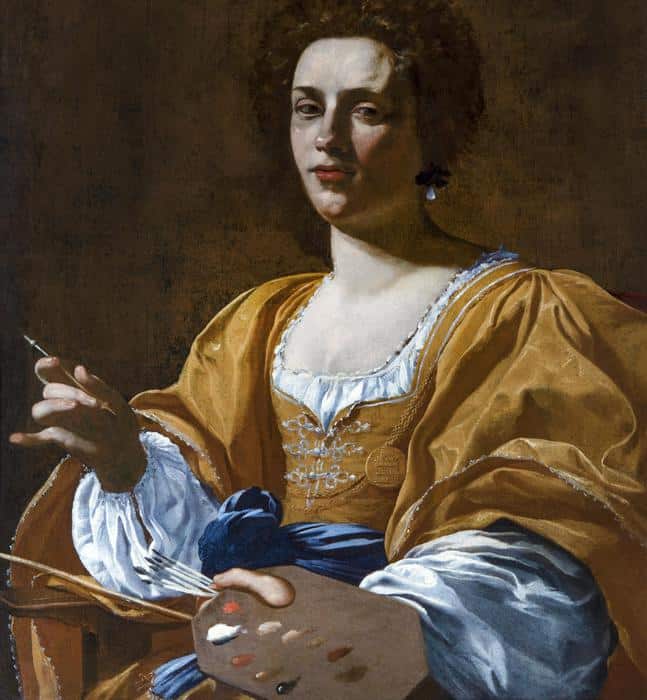
Artemisia Gentileschi arrived in Florence in 1613. She was twenty years old, had just married a Florentine painter named Pierantonio Stiattesi, and was leaving behind Rome, where her story had become public for the wrong reasons: the rape she suffered at just seventeen and the trial that followed, complete with humiliation in court.
Something changes in Florence. Word of the scandal reaches here too, but the city offers her something Rome had not yet provided: the opportunity to be valued first and foremost for her work. She finds protection at the Medici court, forges important connections, and receives serious commissions.
Over the seven years until 1620, Artemisia forged a significant part of her artistic identity. She painted, engaged with other artists, and entered an institution no woman before her had ever achieved. And she left behind works that can still be seen today, in the same palaces and museums where they were created.
This article follows that period, one place at a time: from the house where she settled upon arrival, to the buildings that today house her most important paintings.
Who was Artemisia?
Artemisia was born in Rome in 1593, into a family that had been involved in painting for a generation. Her father, Orazio Gentileschi, was an established artist, close to Caravaggio, and in his workshop, Artemisia grew up breathing paint and brushes from an early age.
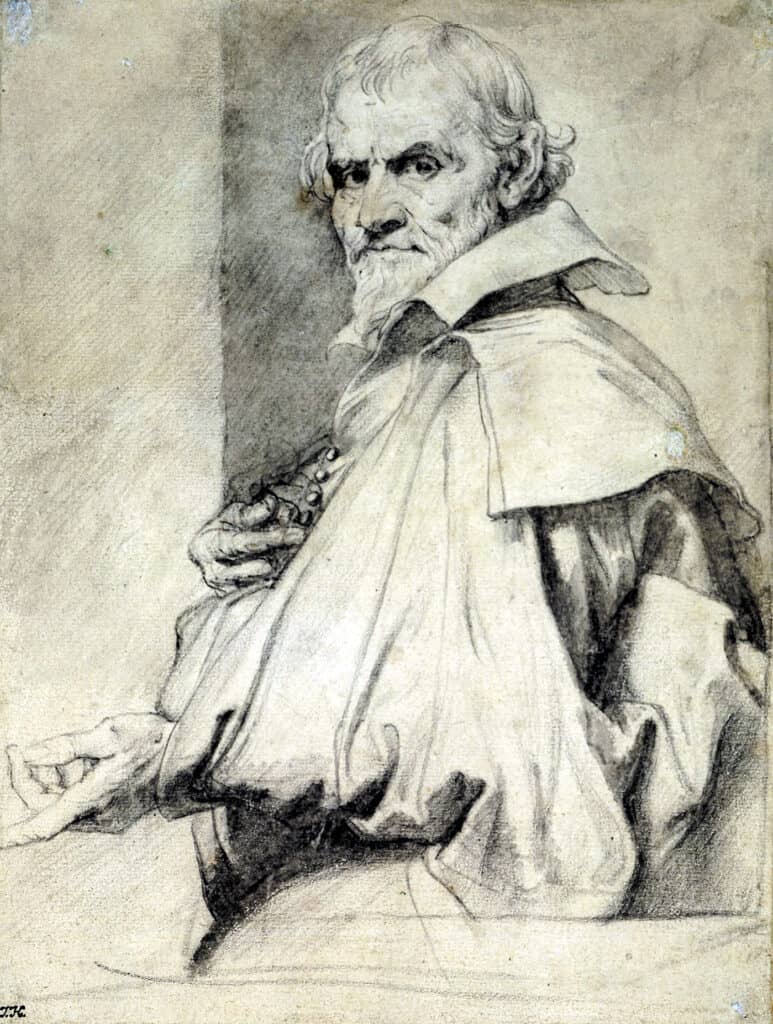
It wasn’t a common path for a girl of the time. In the 17th century, women were rarely taught to paint seriously: at most, a little drawing, just as a pastime. Artemisia, however, worked side by side with her father, learned the technique, and immediately demonstrated a confident hand.
The episode that marked her public life came at the age of seventeen: she was raped by Agostino Tassi, an associate of Orazio. A long and harsh trial followed, in which Artemisia was even subjected to torture to “verify” the veracity of her testimony. Tassi was convicted, but his sentence remained light.
The day after the trial ended, Orazio arranged a shotgun wedding for his daughter with Pierantonio Stiattesi, a Florentine painter of modest fame. It was a union intended more to restore her reputation than for love, but it was also the reason Artemisia left Rome. In 1613, she arrived in Florence, her husband’s hometown, to start a new life.
A house on Via del Campaccio, a son in Santa Maria Novella
When Artemisia arrived in Florence, she went to live on what was then called Via del Campaccio, now part of what is now Via Faenza, not far from Santa Maria Novella. Pierantonio’s father had a home there, and it was there that Artemisia set up her first Florentine studio.
A few months after their arrival, in September 1613, Giovanni Battista, their firstborn, was born. He was baptized in the Basilica of Santa Maria Novella, a short walk from the family’s home. The child, however, did not survive: he died within a week and was buried in the same church.
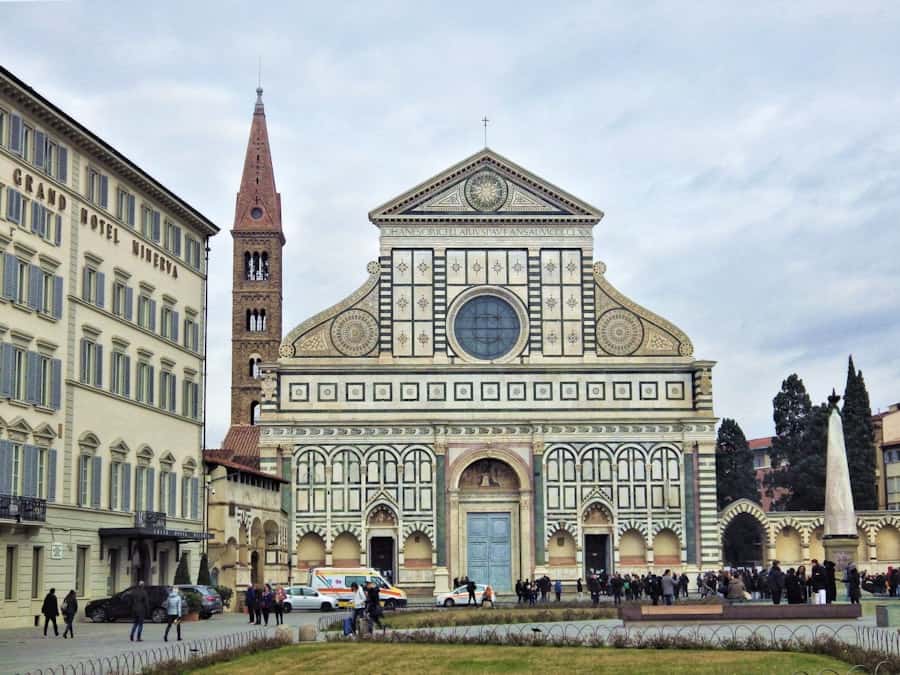
This is a part of Artemisia’s life that speaks volumes about her first months in Florence. She arrived in an unfamiliar city, pregnant, fresh from a trial that had exposed her publicly, and almost immediately found herself facing a loss. Yet it was precisely during these years that her painting began to take the direction we know today.
If you pass by Santa Maria Novella, remember that, before becoming the museum and basilica that millions of visitors pass through every year, for Artemisia it was the site of one of the most private and painful moments of her life in Florence.
The first woman at the Academy of Drawing
Within a few years, Artemisia stopped being just the wife of a minor painter and became a major name in Florence. She received commissions, was introduced to the right circles, and in 1616 she achieved something no woman had ever achieved before: she joined the Academy of Drawing Arts.
To understand what this really meant, we need to think about what the Academy was at that time: a true institution that protected artists, certified their value, opened its doors to public commissions and a network of relationships that a woman, at the time, could hardly build alone.
In the Academy’s documents, her name is recorded as “Gentileschi Artemisia, wife of Pierantonio Stiattesi and daughter of Orazio Lomi.” Even at the moment of her recognition, in short, her identity still passes through that of her husband and father. But the very fact that she was admitted, in a virtually all-male institution, remains a striking exception for the 17th century.
Behind this achievement was also the support of the Medici court: Grand Duke Cosimo II de’ Medici knew her, appreciated her work, and in a letter from 1615, already described her as “a well-known artist in Florence.” This support opened many doors for her, including those of one of her most important patrons.
Casa Buonarroti and his friendship with Michelangelo the Younger
Among the people Artemisia frequented during these Florentine years, one in particular left a lasting impression: Michelangelo Buonarroti the Younger, great-grandson of the great Michelangelo. He was a cultured man, well-connected in the city’s artistic and intellectual circles, and for Artemisia he became much more than a simple patron.
In the letters they exchange, Artemisia calls him “compare” and describes herself almost as an adopted daughter. A bond that goes beyond the professional relationship and also translates into important work opportunities.
In 1616, Buonarroti commissioned her to paint the Allegory of Inclination for the ceiling of the gallery of Casa Buonarroti, which he was having decorated to commemorate his great-uncle. The figure, painted nude, represents Artemisia’s natural inclination to art. Some claim the face is that of Artemisia herself.
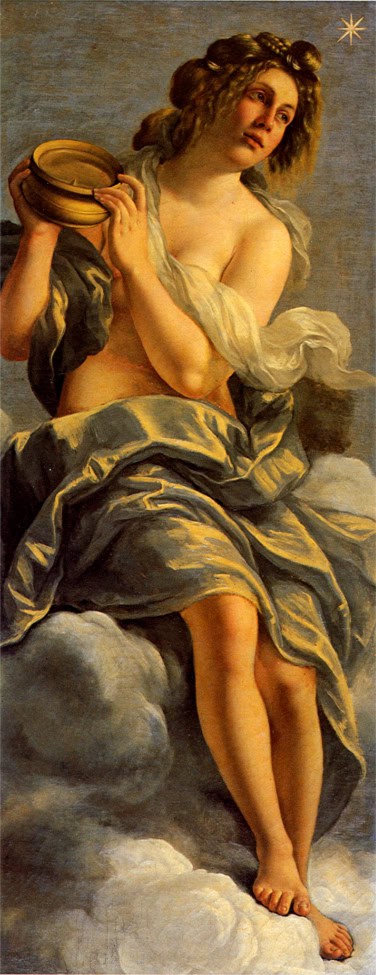
A few decades later, a descendant of the family decided that the nudity was no longer appropriate for the house: he commissioned the painter Baldassarre Franceschini, known as Volterrano, to cover the figure with drapes. For centuries, the painting remained hidden from view.
Only recently, between 2022 and 2023, was the painting removed from the ceiling and publicly restored at Casa Buonarroti, as part of a project that allowed researchers to study what lay beneath the 19th-century additions. Today, the painting is back in its original place, and is one of the best reasons to visit this museum, often off the beaten track.
The works at the Uffizi and Palazzo Pitti
If you want to see the more mature side of Artemisia’s Florentine painting, the route passes through two very close places: the Uffizi Gallery and Palazzo Pitti.
At the Uffizi, in the room dedicated to Caravaggio and the Caravaggesques, is her most famous work: Judith Beheading Holofernes. The painting was painted for Grand Duke Cosimo II around 1620, just toward the end of Artemisia’s Florentine sojourn. The scene is stark and direct: Judith and her maid, together, hold down Holofernes’s body while they behead him. It’s no small detail that two people perform the deed: in the original biblical version, the maid waits outside the tent. Artemisia chooses to make her as much the protagonist as her mistress.
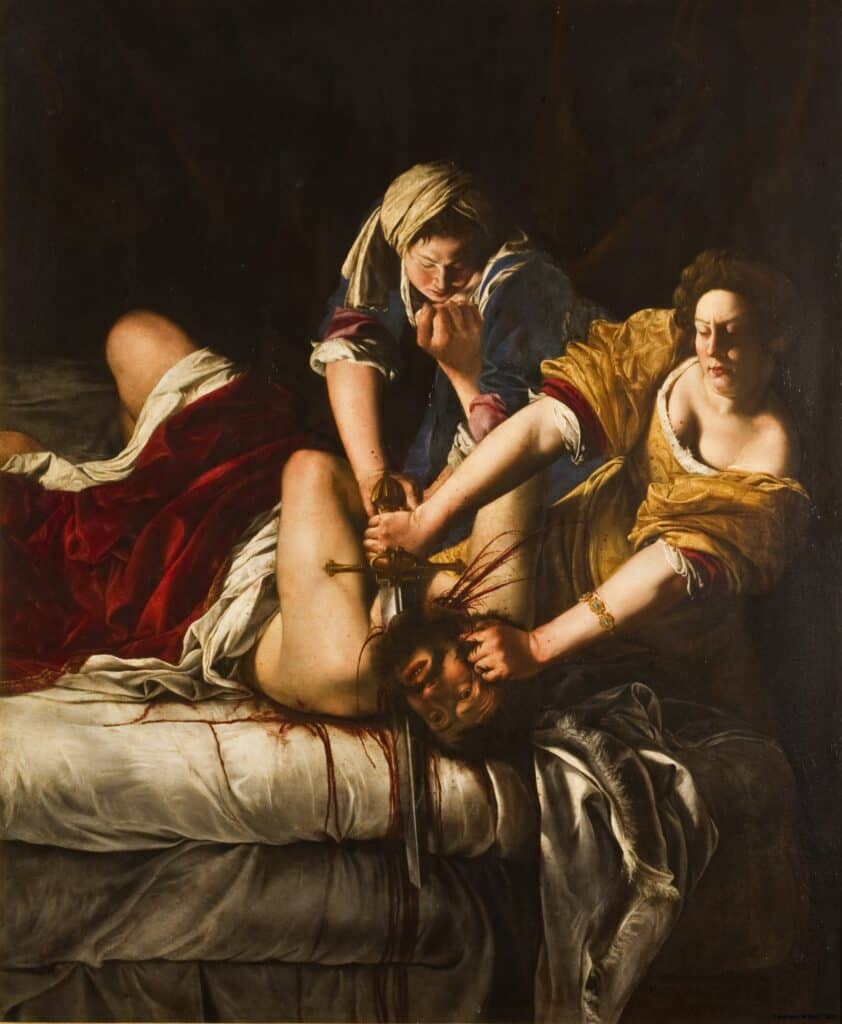
The realism of the scene, at the time, did not please everyone. The painting was relegated to a hidden corner of the Pitti Palace, and Artemisia struggled to obtain the agreed-upon payment. A friend she frequented during her Florentine years, Galileo Galilei, intervened on her behalf, helping her secure the sum owed to her by Cosimo II. Also at the Uffizi is Saint Catherine of Alexandria, a smaller but equally significant work, likely inspired by both the painter’s face and that of one of the Grand Duke’s daughters.
A few minutes’ walk away, in the Palatine Gallery of Palazzo Pitti, are two other works from this period: Judith with her Handmaid and the Conversion of the Magdalene.
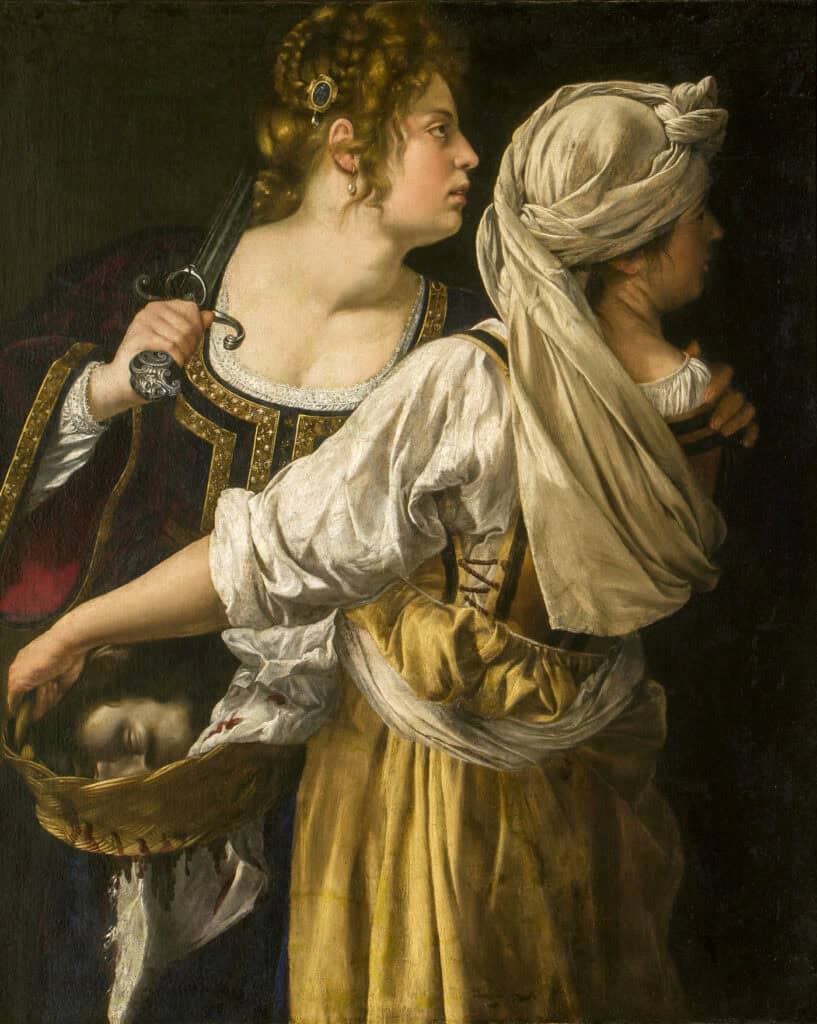
In the first, the two women carry away the enemy’s head hidden in a basket, illuminated by a light that seems to come from a candle: a dramatic, almost theatrical effect.
In the second, Mary Magdalene is portrayed wearing a golden silk dress, her gaze turned upward, in a moment of recognition of her sins.
Viewed side by side, these works clearly illustrate Artemisia’s journey during her Florentine years: from a young painter still tied to the style of her father and Caravaggio, to an artist with a recognizable language, capable of imposing her choices even when the client dislikes them.
Why she leaves Florence
Despite her successes, Artemisia’s Florentine period was never entirely peaceful.
Her husband Pierantonio lives beyond his means, accumulating debts with carpenters, shopkeepers, and pharmacists. The family’s financial situation worsens year after year, despite the commissions Artemisia manages to secure.
To further complicate matters, a personal scandal arises: Artemisia is discovered to be having an affair with Francesco Maria Maringhi, a man of Florentine high society. The news spreads, and her already strained relationship with the court of Cosimo II further deteriorates.
Amidst debt, four pregnancies in a few years, and an environment that was beginning to feel too tight for her, Artemisia finally decided to leave Florence. In 1620, she returned to Rome, abandoning her studio with several works still unfinished.
His connection with the city, however, did not completely end. Even after his departure, he wrote letters to Florence, hoping to secure a new invitation under the Medici’s protection—an invitation that never came. From Rome, his career continued between Venice, Naples, and London, but none of these stops would impact his artistic development as much as the seven years he spent on the Arno.
Where to find Artemisia in Florence?
Whether you’re visiting Florence for a day or a week, it’s worth setting aside some time for this itinerary. The Uffizi and Palazzo Pitti are both almost mandatory stops, so a quick glance in the right rooms is all it takes to spot Artemisia’s works without deviating from your itinerary. Casa Buonarroti requires a more deliberate choice, as it’s rarely included in the city’s quickest tours, but it’s precisely there that you can see the lesser-known side of these Florentine years: her friendship with Michelangelo the Younger, the painting that remained hidden under a drape for almost two centuries.
And if you happen to pass by Santa Maria Novella, it’s worth remembering that that same place meant something else to Artemisia: the spot where, having just arrived in a new city, she faced one of the most difficult moments of her personal life.
Taken together, these stages tell a part of Artemisia’s story that is rarely told: the artist who reacted to violence, certainly, but also the woman who built, step by step, her professional independence in Florence.