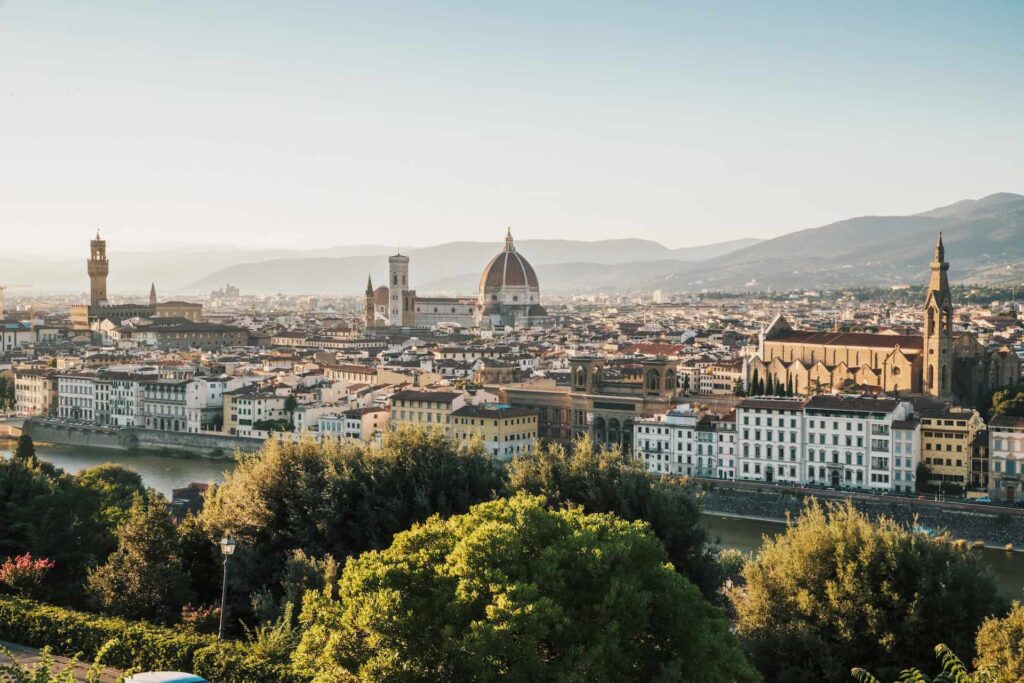


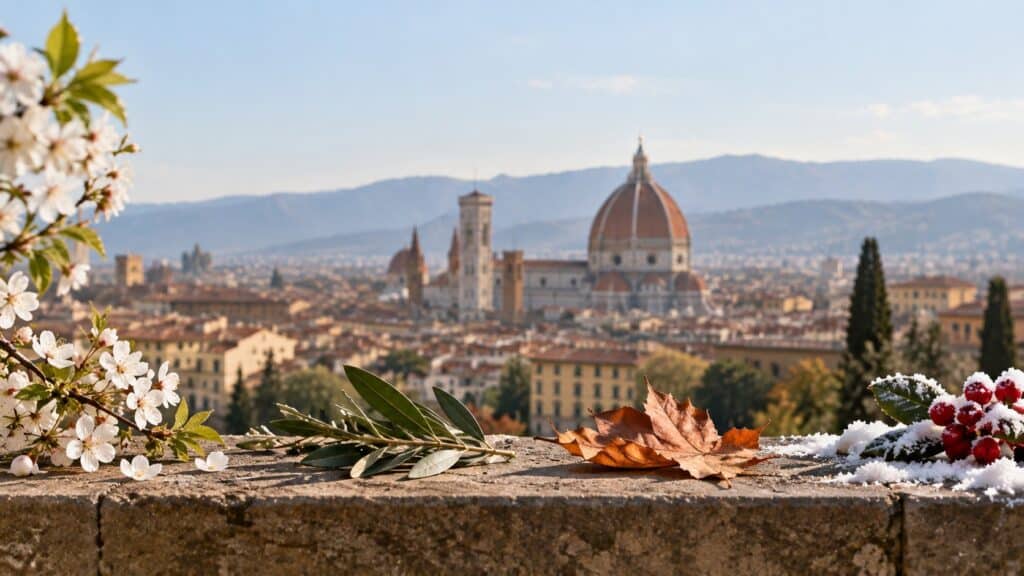
One of the most frequently asked questions from those who ask me to organize a guided tour is always this: when is it best to come to Florence?
Behind the question there are almost always many well-defined concerns:there are those who want to avoid the heat of July and August, those who don’t want to find themselves in the rain for more days than expected, and those who have heard about interminable queues and want to understand how to avoid them or limit them as much as possible.
There is also who asks me the opposite: wants to know when it’s worth coming to see the Florentine Historical Football or the Christmas markets, even knowing that on those days the city is busier and hotels cost more.
Asking when is the best time to visit Florence isn’t a bad question; on the contrary, it’s the best question to ask yourself to ensure you fully enjoy your visit and see exactly what you want to discover.
I’ll take you through these variables month by month—weather, queues, events, and prices—so you can decide which one weighs most heavily in your decision.
Spring: the most stable climate, but also the most crowded
From April to June, average temperatures in Florence range from 15 to 24 degrees, with about 6-10 days of rain per month: enough to bring an umbrella, but not enough to ruin a day of sightseeing. These are normal conditions, excellent for long walks, climbing the 463 steps of Brunelleschi’s Dome without suffering from the heat, or spending an afternoon between the Boboli Gardens and Piazzale Michelangelo.
As you surely expect, the same climate also brings the largest crowds of the year, along with September. Among the others, from April to June is held on May Musical Festival in Florence, the festival that fills the city’s theaters with concerts and operas, and the entrances to the Uffizi and Accademia register the longest lines of the season, especially on weekends in May: without an online reservation you can find yourself queuing up to an hour before entering.
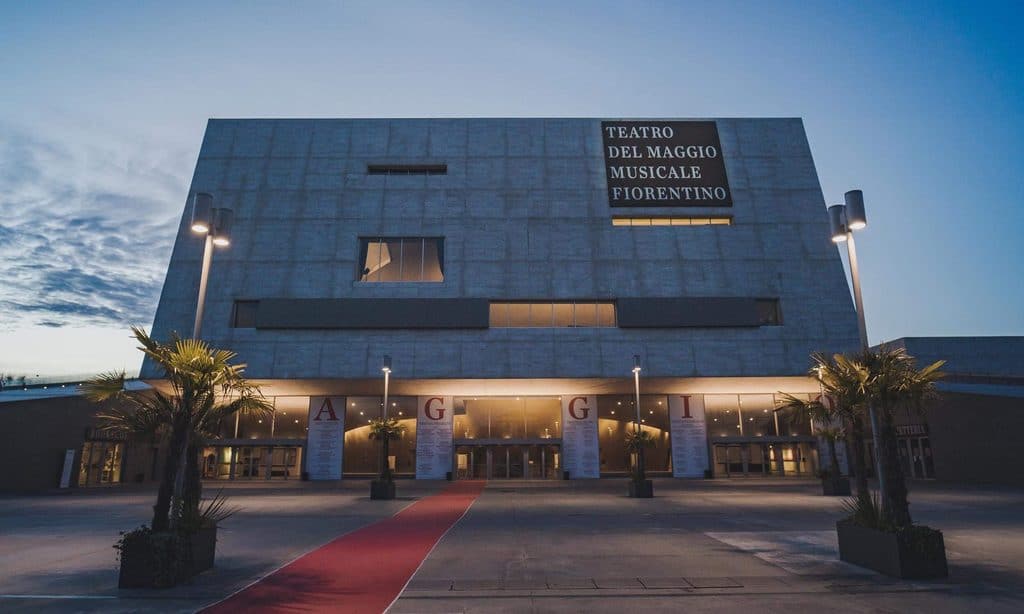
If you want the best weather and are willing to accept the crowds, the Spring is the right time for you, but remember to book tickets to the main museums in advance to avoid unpleasant surprises.
Summer: intense heat, but also Calcio Storico and outdoor evenings
In July and August, maximum temperatures regularly exceed 30 degrees, and on some days reach over 35. Inside the museums, where the air conditioning does not always cover every room, the central hours of the day they can become heavy to deal with. In this period, as happens for many historical and artistic cities, many Florentines leave the city for part of August.
But if you think that this will empty the historic center, you are wrong: the influx of international tourists is certainly decreasing, but not as significantly as you might expect. Queues are often similar to those of May, only under a much stronger sun.
The downside is summer, the Florentine Summer, the program of concerts, open-air cinema and shows that from June to September enlivens the city’s parks and clubs until late at night, when the temperatures finally drop.
And the period of the Florentine Historical Football. The four teams from the historic neighborhoods—the Whites of Santo Spirito, the Blues of Santa Croce, the Reds of Santa Maria Novella, and the Greens of San Giovanni—face off on a sand court set up in Piazza Santa Croce.
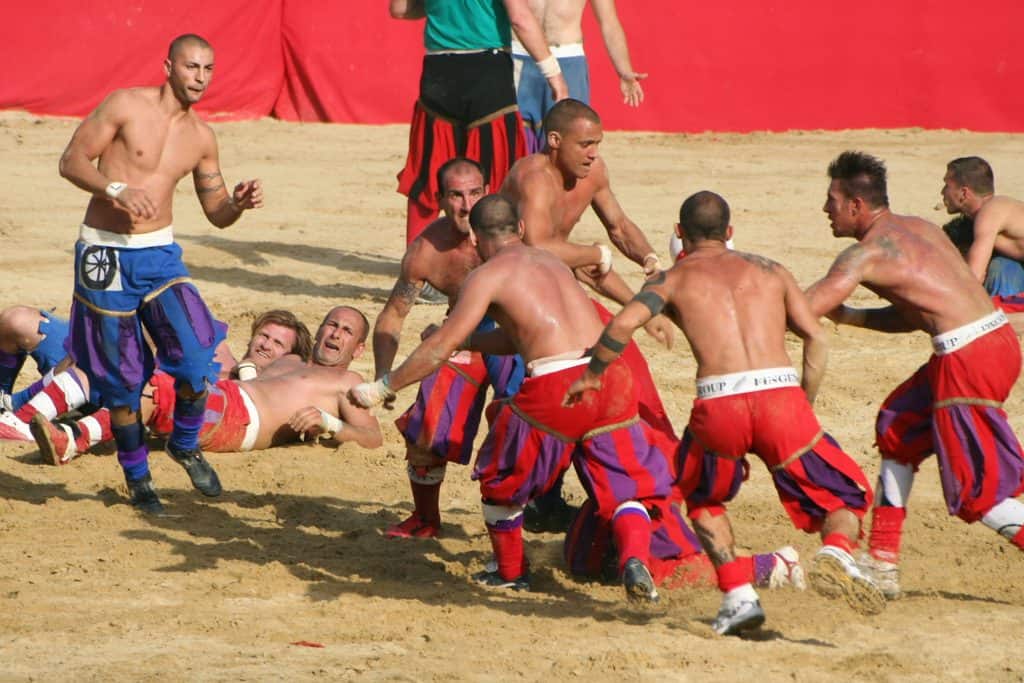
The two semifinals are played on the same weekend in June, with the final always on June 24th, the feast day of San Giovanni, the city’s patron saint. If you want to see the event, keep in mind that on those days hotel prices and crowds increase further compared to the rest of the summer and, again, make sure you book well in advance to avoid being left empty-handed.
Autumn: the same climate as May, but with fewer people
September and October offer conditions very similar to spring: temperatures that gradually drop but remain well above 20 degrees until mid-autumn, and a number of rainy days comparable to April and May.
On September 7, on the eve of the feast of the Nativity of the Virgin, the Rificolona. A procession of paper lanterns that begins in the afternoon from the Sanctuary of Impruneta and passes through Ponte Vecchio, Piazza della Signoria, and Piazza del Duomo, before concluding around 9:30 PM in Piazza Santissima Annunziata, where the lanterns are blessed. This festival is designed especially for families and children, and for one evening, it brings the city to a slower pace rather than a throng of tourists.
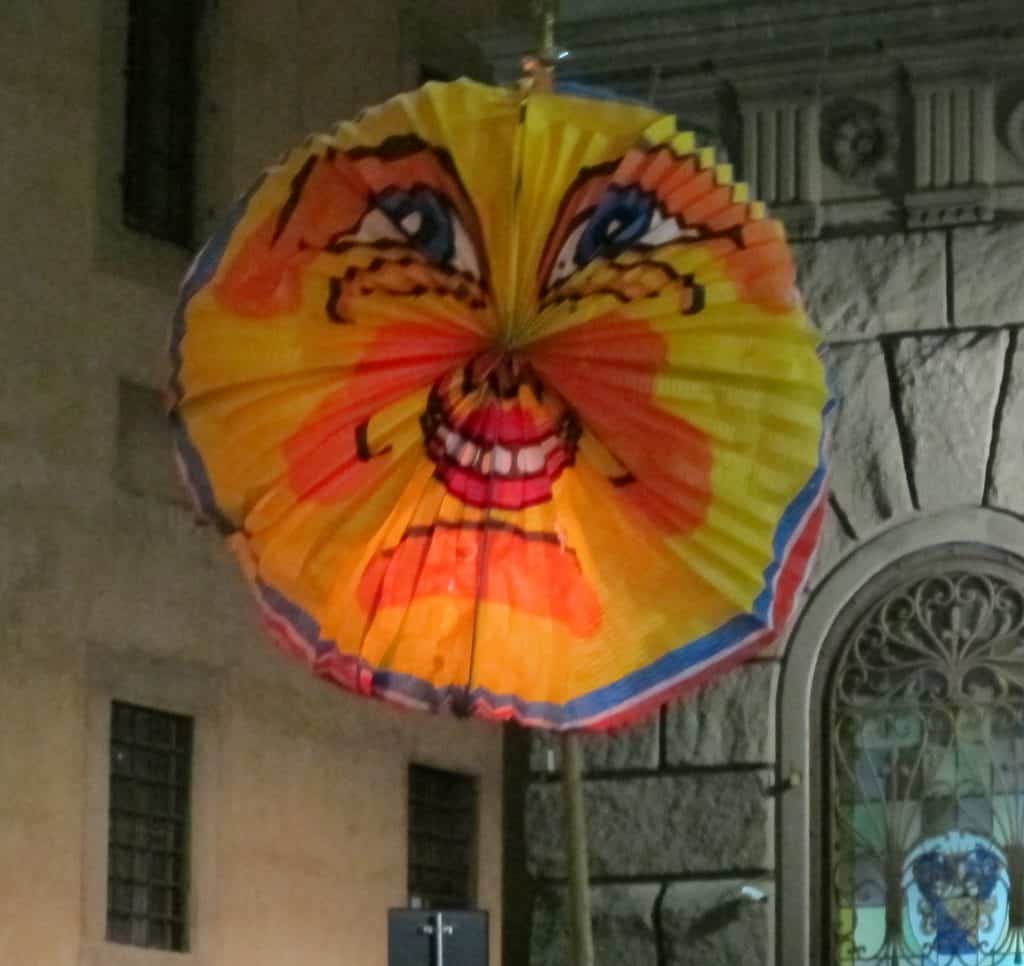
Once you have passed the Rificolona generally crowds drop significantly compared to May: October in particular remains one of the least popular months for visitors, despite the weather remaining among the most reliable of the year.
Winter: low season, between silence and Christmas markets
From January to March, Florence empties out more than at any other time of year. Average temperatures in January range between 2 and 11 degrees Celsius, snow is rare, but it rains fairly regularly, averaging 7-9 days per month, and daylight hours are significantly shorter than in summer.
In return, entrances to the main museums are visited at a completely different pace: at the Uffizi, you can sometimes enter in the morning and find yourself almost alone in front of the Birth of Venus, something unthinkable in May.
Alone December is an exception to this with calm winter from mid-November until a few days before Christmas, Piazza Santa Croce hosts the Christmas market, the German-style Christmas market with over 50 wooden stalls selling crafts, decorations, and Christmas street food, while Christmas lights enliven the city center streets.

Crowds and hotel prices are rising, though they remain far from the levels of May or August.
What if it rains?
Between November and March, it’s possible to expect a few rainy days, but Florence offers several indoor alternatives that are just as worth a visit as a stroll outdoors.
- The Uffizi and Pitti Palace, with the Palatine Gallery and the Royal Apartments, alone require half a day;
- The Bargello Museum collects Renaissance sculptures with fewer crowds than the more famous museums;
- San Lorenzo Central Market, covered on two floors, remains a practical option for a hot meal while it’s raining outside.
If you want to learn more about this topic, I wrote a specific post onwhat to do in Florence when it rains.
How much do hotels in Florence cost depending on the season?
Hotel prices usually go hand in hand with the crowding and to the events, more than just the weather.
April, May, June, and September remain the most expensive months of the year, with further peaks during Calcio Storico and Maggio Musicale. July and August remain high despite the heat, due to the constant flow of international tourists.
From January to March, prices drop significantly compared to the rest of the year, with the exception of December, when the Christmas markets and holidays cause them to rise for a couple of weeks.
When to book based on what you’re looking for
If the weather is your priority, aim for April, May, September, or October. These are the months with the highest probability of sunny days and temperatures between 18 and 24 degrees Celsius, but also factor in the cost: at the Uffizi and the Accademia, lines without online reservations can easily exceed an hour, especially on weekends in May and the first half of September. Booking tickets two or three weeks in advance will save you much of that time wasted in line.
If you want to avoid the crowds and spend less, January, February, and March remain the best times for both. Museums are visited at a much slower pace, downtown hotels are at their lowest prices of the year, and you can find availability even by booking just a few days in advance. The downside is the weather: days end early, temperatures rarely rise above 12 degrees Celsius, and a few more rainy afternoons than in spring.
If you want to be there for the Calcio Storico, the Maggio Musicale, or the Christmas markets, the priorities change: you’re not choosing between weather and crowds, you’re choosing to accept both to avoid missing the event. In these cases, it’s best to book early. For the weekend of the Calcio Storico final, at the end of June, hotels in the city center fill up two or three months in advance. For the Christmas markets in Piazza Santa Croce, booking at least a month in advance gives you more choice of accommodations without paying the highest rates of the season.
Whichever time of year you choose, Florence holds its own year-round. Change how you experience it, not what you find when you arrive!