

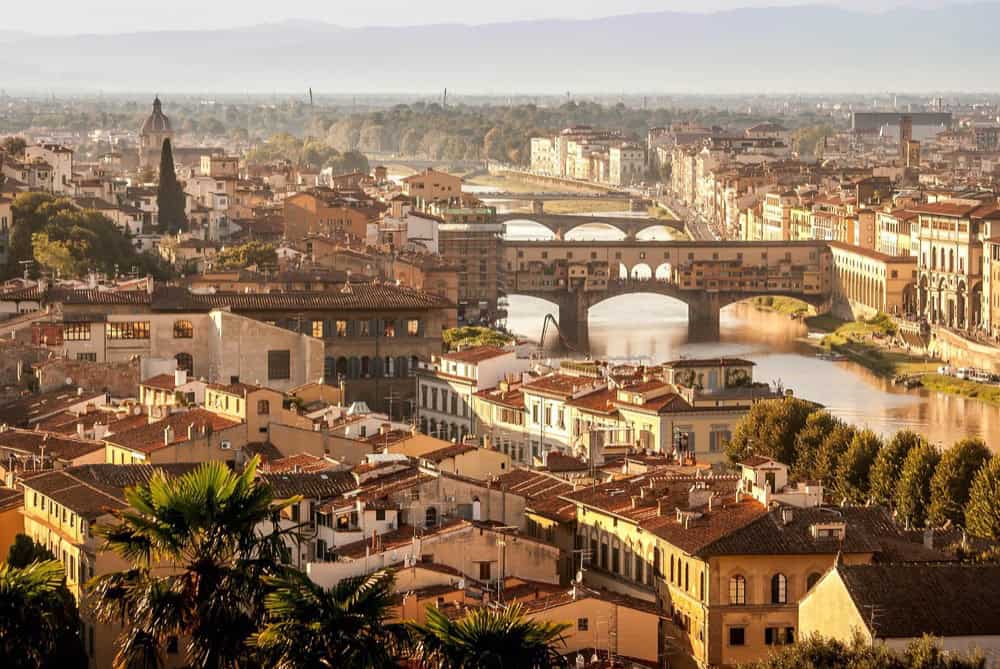
There are places in Florence that you pass almost without thinking, and others that, even after dozens of crossings, still manage to stop you for a moment. The Ponte Vecchio is one of them. It’s not just a link between the two banks of the Arno: it’s a piece of the city suspended over the water, a place lived in, inhabited, gazed at every day by those who live in Florence and sought out with wonder by those visiting for the first time.
In this article I want to tell you about the Old Bridge going a little beyond the postcard. I’ll tell you about its history, who built it, why it’s so different from all other bridges, as well as curiosities, legends, and details that often escape a cursory glance. A story that blends historical information and atmosphere, to help you understand why this bridge has become one of the most recognizable symbols not only of Florence, but of Italy as a whole.
The history of the Ponte Vecchio in Florence
The Ponte Vecchio we see today is not the first bridge built at this point on the Arno. Already in roman times existed a passage that connected the two banks, but over the centuries the river has repeatedly destroyed the previous structures, especially due to floods.
The current bridge dates back to 1345 and is traditionally attributed toTaddeo Gaddi, even if historical sources are not entirely in agreement. What is certain is that, for the time, it was an extraordinary work: a bridge entirely made of masonry, solid, designed not only for passage but also for being inhabited.
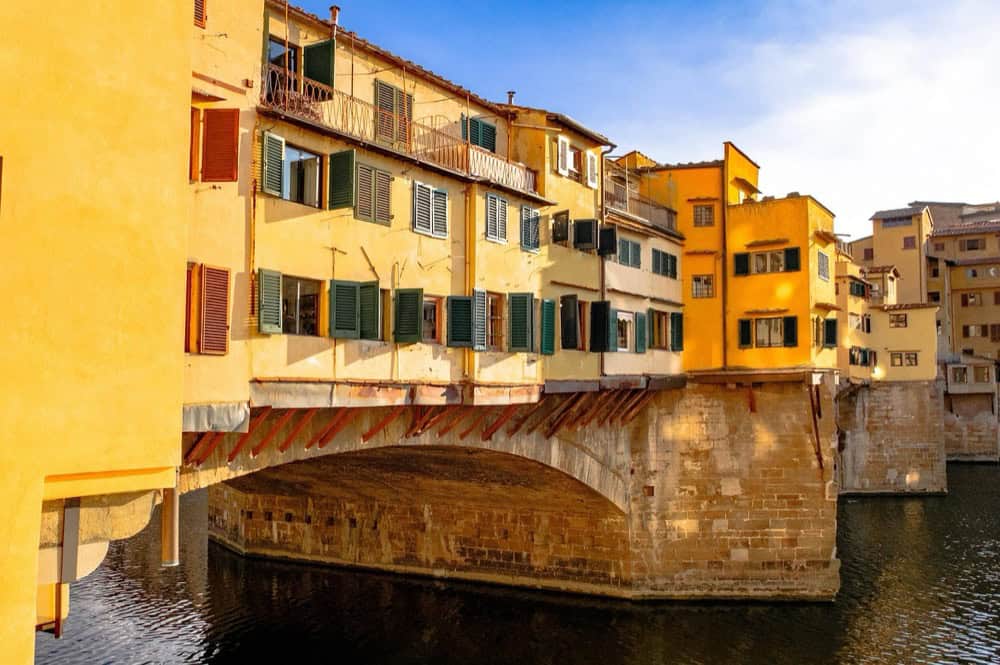
From the very beginning, the Ponte Vecchio housed shops. Initially, they housed butchers, tanners, and food vendors—useful but not very “fragrant” trades—and were chosen, not coincidentally, to be located over the river. Only in the 16th century, at the behest of Cosimo I de’ Medici, were the shops reserved for goldsmiths and jewelers, lending the bridge the elegance that still characterizes it today.
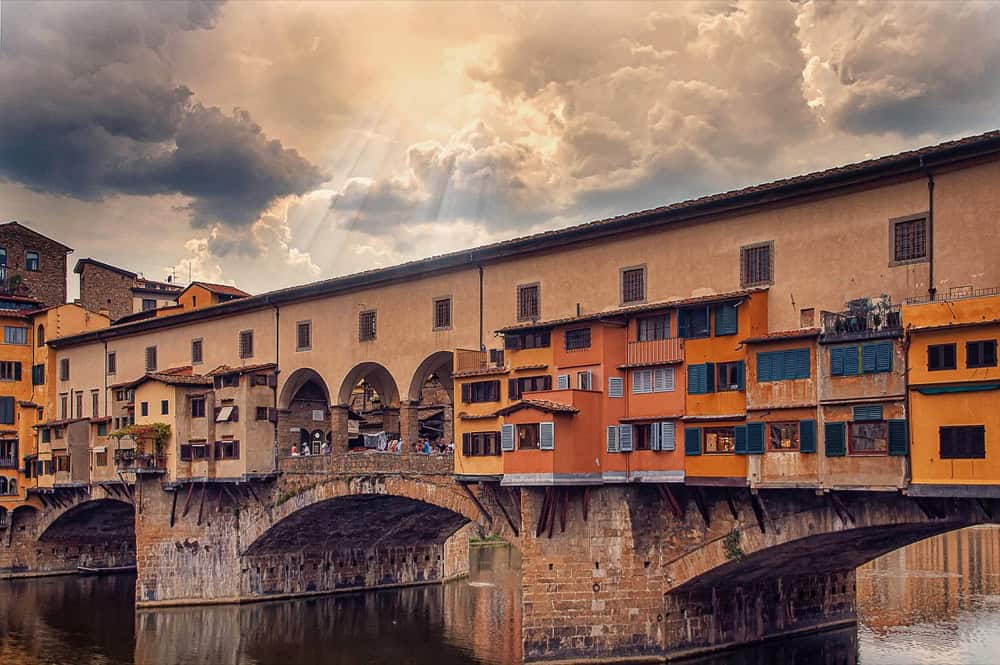
Since then, the Ponte Vecchio has become a unique place:a bridge that is also a road, a market, a meeting point and a privileged observatory over the Arno. It has survived wars, floods and urban changes, always maintaining its identity. It is not a coincidence that it is the only bridge in Florence to have escaped the destruction of World War 2,, a detail that alone would be enough to convey its symbolic importance.
What does the Ponte Vecchio look like and why is it so unique?
What makes the Ponte Vecchio immediately recognisable is not only its position on the Arno, but also its unusual structure. Unlike other historic bridges, here you don’t just cross the river: you walk through a small suspended world, made of shops, narrow passages, and glimpses that suddenly open onto the water.
The bridge is composed of three lowered arches, an innovative technical solution for the time, which guaranteed greater stability over time. Above these arches, a veritable street extends, lined with buildings, with shops nestled close together, almost as if the bridge were a natural extension of the streets of the historic center.

Strolling along the Ponte Vecchio, you immediately notice how intimate the space is. The goldsmiths’ windows overlook the passageway, creating a lively and continuous atmosphere, while at the center of the bridge lies a small, larger area, often crowded with people who stop to watch the Arno flow beneath them. It’s one of the best spots to observe the river, especially at sunset, when the light reflects off the water and the facades of the buildings.
Above the shops, almost hidden from the distracted gaze, runs the Vasari passage:, the elevated passage wanted by the Medici to connect Palazzo Vecchio to Palazzo Pitti without having to blend in with the crowd. The corridor windows, especially visible on the upstream side of the bridge, tell a different story of Florence, one of power, privacy, and control.
It is precisely this overlapping of functions—bridge, road, market, secret passage—that makes the Ponte Vecchio a unique place. It is not just a work of architecture, but a piece of the city that lives and changes with those who cross it every day.
Curiosities and legends of the Ponte Vecchio
The Ponte Vecchio is not just history and architecture: it is also a place full of stories, traditions and little mysteries that have fueled the collective imagination over time. Some are documented, others passed down, and still others arise from the observation of details that pique the curiosity of those who stop to look carefully.
The Ponte Vecchio and World War 2
One of the most famous curiosities is that the Ponte Vecchio is the only bridge in Florence not to have been destroyed during World War II. In 1944, while all the other bridges over the Arno were blown up by the retreating Nazis, the Ponte Vecchio remained standing.
According to one of the most widespread versions, the order came directly from above, to preserve what was already considered a unique symbol of the city. Around the bridge, however, the access buildings were destroyed, creating a dramatic scene that is difficult to imagine today while strolling peacefully among its shops.
The bust of Benvenuto Cellini and the tradition of good fortune
A detail that often goes unnoticed is the small bust of Benvenuto Cellini, located in the center of the bridge, on the downstream side. Many people only notice it when they stop to observe calmly, perhaps stepping away for a moment from the constant flow of people.
According to a popular tradition,touching the nose of the bust would bring good luckObviously there is no historical evidence to support this belief, but as often happens in Florence, this gesture has also become part of the collective narrative linked to the place!
The Ponte Vecchio and the origin of the term “bankruptcy”
Then there is a linguistic curiosity which has its roots in the world of medieval merchants. It is said that the expression “bankruptcy” derives from the act of breaking the bank (“banco rotto”) of insolvent merchants.
Although the direct connection with the Ponte Vecchio is more symbolic than documented, the idea well conveys the importance this place has had over the centuries as a center of trade, exchange, and economic activity.
The Vasari Corridor: a passage over the bridge
Finally, one of the most fascinating and least visible presences of the Ponte Vecchio is the before mentioned Vasari Corridor, which runs above the shops. Designed to allow the Medici to move around without mingling with the crowds, the corridor has always fueled tales of secret passages and hidden views of the city.
Even today, when viewed from the outside, the Vasari Corridor contributes to the bridge’s mysterious allure, adding a further layer to a place already rich in history.
Because the Ponte Vecchio is much more than a bridge
The Ponte Vecchio isn’t one of those places you visit only once and then store away in your memory. It’s a space that changes with the time of day, the season, and even the mood you’re in when you cross it. In the early morning, it’s silent, almost intimate; in the late afternoon, it fills with voices and footsteps; in the evening, when the lights reflect on the Arno, time seems to slow down.
Knowing its history, its transformations, and the little legends that surround it helps us see it with different eyes. It’s not just a perfect backdrop for a photograph, but a place that speaks to centuries of Florentine life: trade, power, art, resilience. It’s one of those places where Florence clearly demonstrates its ability to remain true to itself, despite constant changes.
If you happen to cross it, try to do it so slowly. Stop in the center, watch the Arno flow beneath you, observe the shops, the windows, the details that often go unnoticed. It’s right there, in those small moments, that the Ponte Vecchio stops being just a monument and becomes part of the Florentine experience.
