


Many parents, when thinking about a trip to Florence, ask themselves more or less the same question: does it make sense to visit a city of art with children?
It’s an understandable doubt. Florence is world-famous for its museums, churches, and Renaissance palaces. An extraordinary heritage, but one that at first glance might seem designed primarily for an adult audience. This isn’t entirely true.
Florence is a city that lends itself perfectly to exploration even with little ones, especially if you embrace the idea of visiting at a slightly different pace. The historic center is compact, the distances between the main monuments are short, and most of the streets in the heart of the city are pedestrianized. This means you can get around on foot without much difficulty, stopping frequently and turning the visit into a series of small discoveries.
Many places that for an adult are simply cultural landmarks can become, for a child, opportunities for curiosity and play. A statue that tells a story, a colorful market, a square to stop for a few minutes, a curious tradition like that of the Porcellino: Florence is full of details that capture the attention of even the youngest visitors.
In this guide, we’ve gathered some practical tips and a selection of places and activities that work particularly well when visiting Florence with children up to ten or twelve years old. It’s not about seeing everything in a single day, but rather about creating a pleasant itinerary, made up of short stops, breaks, and small experiences that make the visit easier for the whole family.
Visiting Florence with children: some advice before starting
Before deciding which places to include in your itinerary, it’s worth considering how to organize your visit.
Florence has a feature that makes it particularly suitable for those traveling with children: the historic center is relatively compact. Many of the most important monuments are within walking distance of each other, allowing you to get around almost entirely on foot, without having to travel long distances.
For those visiting the city with children, it can be helpful to consider this aspect when planning the day. Instead of piling on too many stops one after the other, it’s often more pleasant to choose a few places and leave room for quieter moments. The city center squares, for example, often offer the opportunity to stop for a few minutes, observe the city, take a break, or simply let the kids move around a bit after a walk.
Even small stops can become part of the visit. Florence is a city where it’s easy to find a gelato shop, a small shop, or a historic market that pique the curiosity of the little ones and naturally break up the pace of the stroll.
Another factor to consider is time of day. The historic center tends to be quieter in the early morning and late afternoon. At these times, it’s easier to navigate the main streets and squares without the crowds of the midday hours.
Organizing your visit at a more relaxed pace allows you to experience the city with greater serenity, for both adults and children.
What to see in Florence with children
Once you’ve established the pace of your visit, the next question, of course, is which places to include in the itinerary. Florence offers so much, but not all of the city’s spaces are equally suited to a visit with little ones.
Some places work particularly well because they’re spacious, easy to reach, and full of details that pique curiosity. In these cases, there’s no need to turn the visit into an art history lesson: just let the environment do its work.
Cathedral Square
Piazza del Duomo is almost always one of the first stops for those arriving in Florence, even when traveling with children. The space is vast, the architecture spectacular, and the visual impact is immediate.
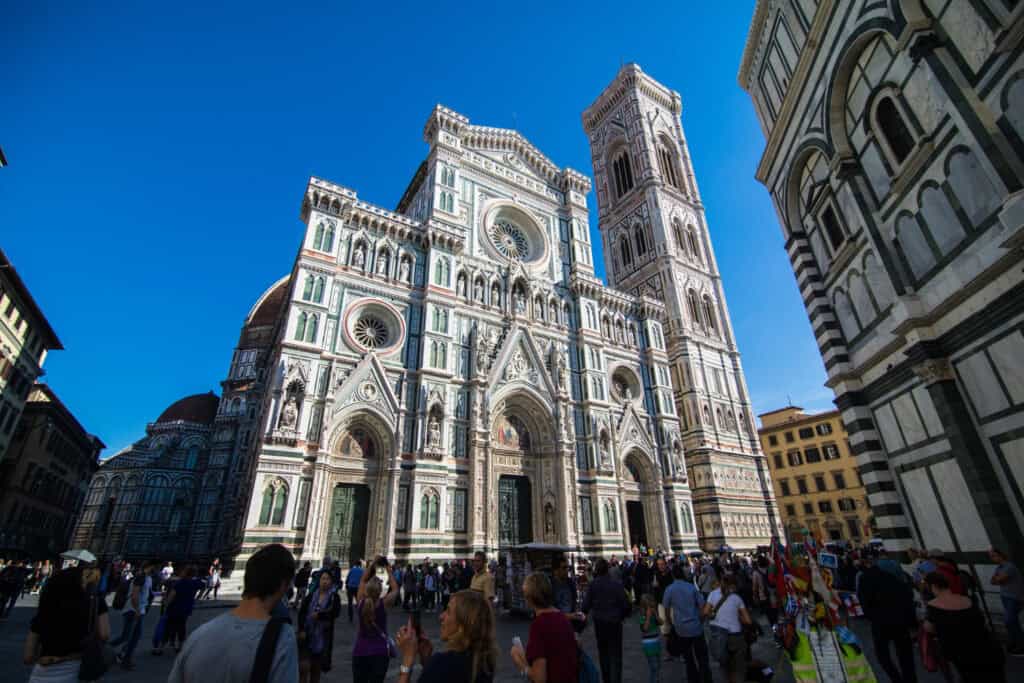
For an adult, the Duomo represents one of the masterpieces of the Renaissance. For a child, however, it’s often simply something enormous and astonishing: the dome dominating the square, the façade covered in white, green, and red marble, the constant flow of people crossing the square.
Even without immediately entering the cathedral, this place allows you to stop for a few minutes and observe the surroundings. Many parents choose to share some interesting facts about Brunelleschi’s dome or the cathedral’s construction, turning the visit into a short story rather than a long and complex explanation.
Piazza della Signoria
Continuing toward the heart of the historic center, you easily reach Piazza della Signoria, one of the city’s most scenic spaces. The square is surrounded by important historic buildings, but it’s also one of the places where Florence appears most vibrant.
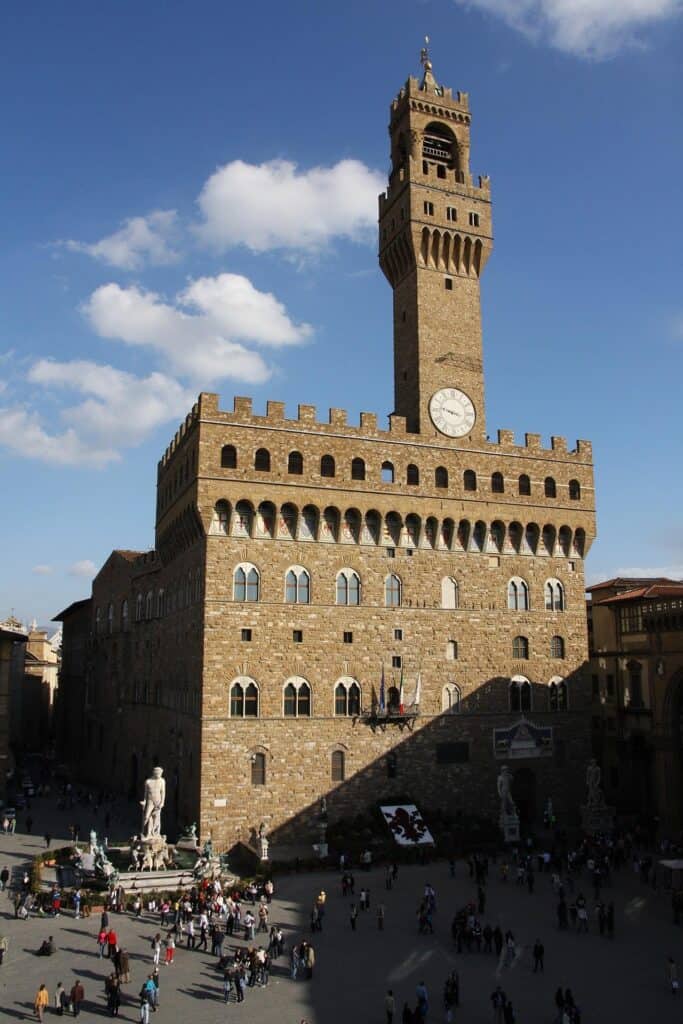
The statues in the square often attract children’s attention. The copy of Michelangelo’s David, the statue of Neptune, the Loggia dei Lanzi with its monumental sculptures: all these works can be admired freely, without the formality of a museum.
This makes the square a particularly suitable place for a family visit. You can stop for a few minutes, walk among the statues, and share a few stories about the city’s history.
Ponte Vecchio
Just a few minutes’ walk separates Piazza della Signoria from Ponte Vecchio, one of Florence’s most recognizable symbols.
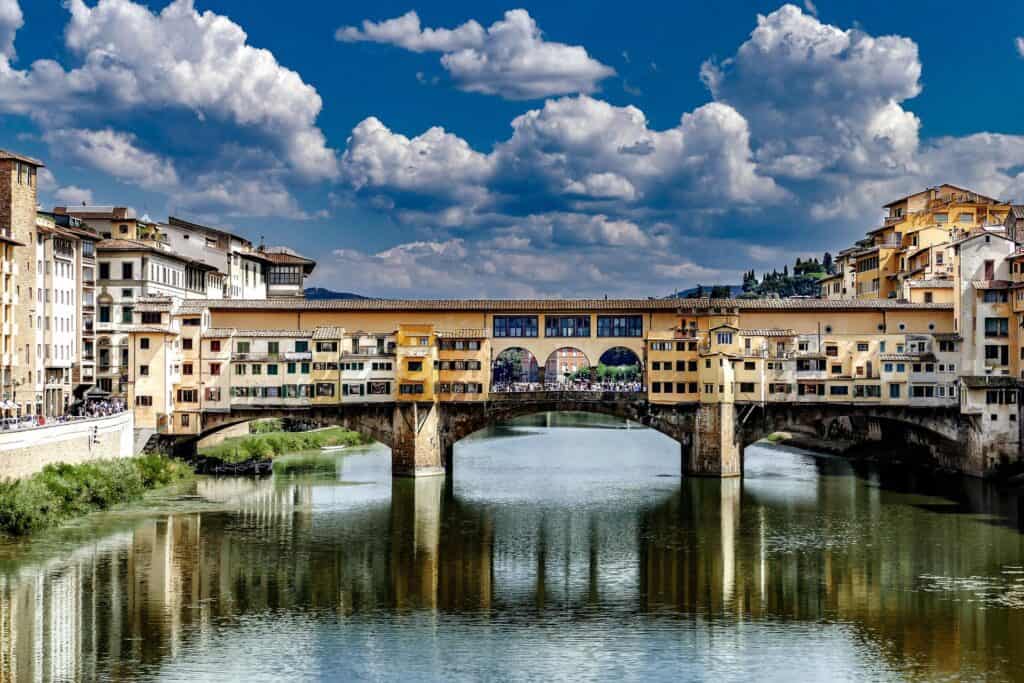
Crossing this bridge is always a special experience, especially for those seeing it for the first time. The small shops built directly above the bridge, the goldsmiths’ windows, and the view of the Arno create an atmosphere that often captivates even the youngest visitors.
Many children are intrigued by the houses built above the bridge and the rows of shops overlooking the water. It’s one of those places where just walking slowly and observing the details makes for an interesting visit.
Little traditions and curiosities that children like
Beyond its grand monuments, Florence is a city full of small rituals and traditions that are often particularly entertaining for children. These simple experiences don’t require lengthy visits or complicated explanations, but they make a stroll through the historic center even more interesting.
Many families discover that it is precisely these moments that remain most etched in the memories of their little ones.
The Little Pig and the Rite of Fortune
One of the stages that most intrigues children is the Porcellino Fountain, which is located under the Loggia del Mercato Nuovo, a few steps from Ponte Vecchio.
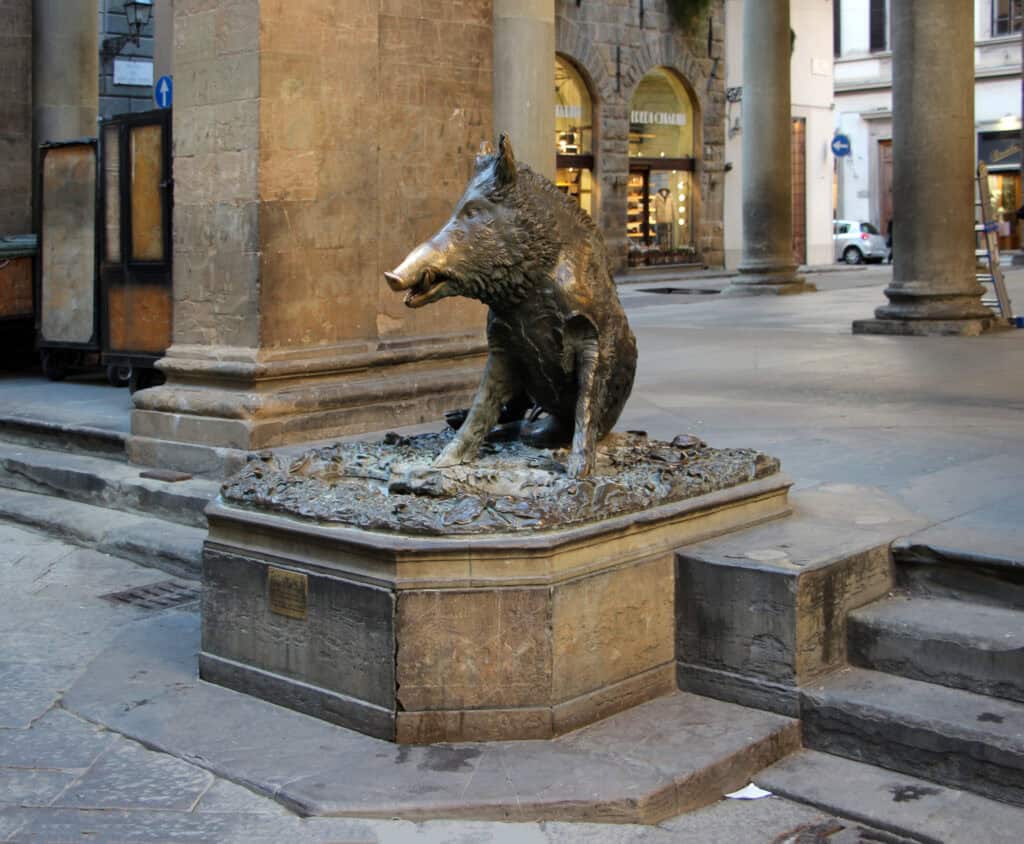
The tradition is simple: you stroke the boar’s nose and drop a coin into the fountain’s grate. Legend has it that this gesture brings good luck and promises a future return to Florence.
For children, it’s almost always a fun moment. The idea of participating in a small ritual brings with it a playful element that breaks up the pace of their visit to the squares and monuments.
The carousel in Piazza della Repubblica
Another stage that surprises many parents is the historic carousel in Piazza della Repubblica.
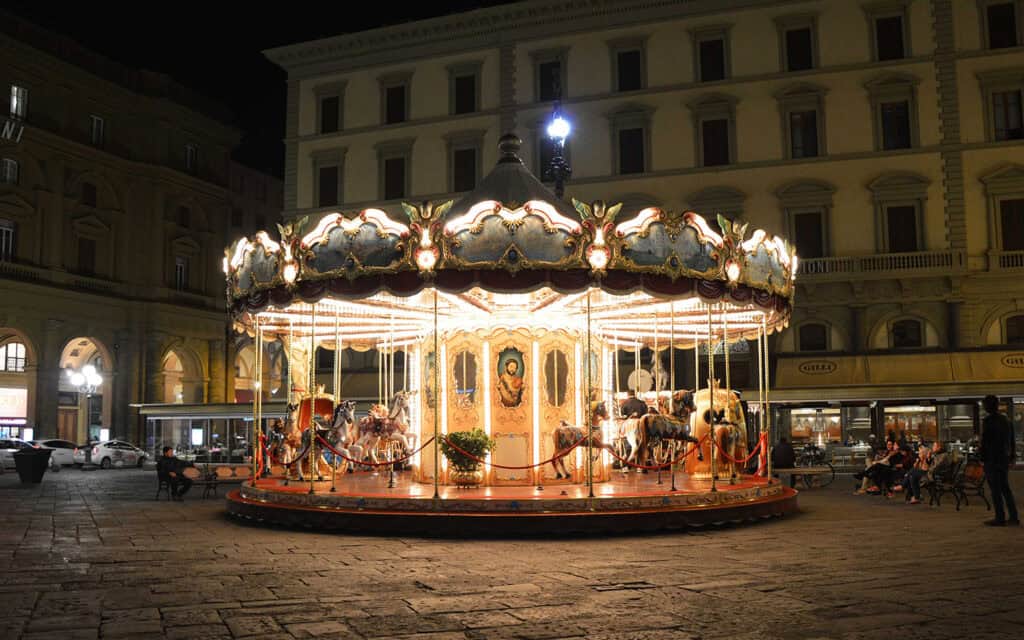
It’s located right in the center of the square and has been in operation for many years. With its colorful horses and classic decorations, it’s reminiscent of the carousels of old and creates a curious contrast with the elegant buildings surrounding the square.
For many children, it’s the perfect break from their visit. While they take a few rides on the carousel, adults can stop for a few minutes at the square’s historic cafés and observe the city center’s life.
Ice cream as a small stop in the day
When visiting Florence with kids, a gelato break is almost inevitable. The city has a long tradition of artisanal gelato shops, and finding a place to stop is not difficult.
This moment often becomes a small reward between stops on the itinerary. After a visit or a stroll through the city center squares, sitting down for a few minutes with an ice cream cone helps make the day lighter and more enjoyable for everyone.
Florence museums that can also interest children
When thinking of Florence and museums, many parents imagine silent rooms, lengthy explanations, and children who, after a few minutes, start asking when they’re leaving. This is a situation that can happen, especially if you try to approach the visit with the same approach you would with adults.
The city also offers museums that capture the attention of children, especially when the visit revolves around curiosity and discovery.
Leonardo da Vinci Museum
One of the most obvious cases is the Leonardo da Vinci Museum. Here, interest stems not so much from the paintings or manuscripts, but from the machines conceived by the great inventor. Models of movable bridges, gears, mechanical instruments, and designs for flying machines help reveal Leonardo’s more experimental side. Many children are surprised to discover that as early as the 15th century, someone was imagining objects that seem almost modern.
Museo Galileo
Another place that often intrigues younger visitors is the Museo Galileo, dedicated to the history of science. Among ancient telescopes, globes, and instruments used to observe the sky or measure time, the visit almost feels like a journey through the scientific curiosity of bygone eras. It’s not necessary to linger in every room: even a short visit can be enough to pique children’s interest.
Old Palace
In some periods of the year also Old Palace offers activities and tours designed for families. In these cases, the visit becomes a short exploration of corridors, historic rooms, and stories related to city life. For children, it can be a different way to engage with history, less tied to traditional explanations and closer to the idea of discovery.
As often happens when traveling with children, a simple rule applies here too: choose a few places and dedicate just the right amount of time to them. This way, the visit remains a pleasant experience and doesn’t become a marathon through halls and corridors.
Parks and green spaces where you can stop with your children
Visiting a city of art often means spending several hours wandering the streets of the historic center, exploring its squares and monuments. For children, it can be helpful to alternate these strolls with more peaceful moments, in places where you can stop, sit, or simply let them move around a bit without feeling like they’re constantly walking.
Although Florence is best known for its artistic heritage, there is no shortage of green spaces that can be a pleasant break during the day.
One of the most famous places is the Cascine Park, the large public park that extends along the Arno River. It’s located slightly outside the historic center, but easily accessible and is a favorite spot for Florentines to stroll, bike, or spend a few hours outdoors. If your day includes several visits to the city center, spending some time at the Cascine Park can be a great way to change your pace and enjoy a more relaxing moment.
Even the Boboli Gardens, behind Palazzo Pitti, can be an interesting stop when visiting Florence with slightly older children. The garden is very large and offers a different view of the city, with tree-lined avenues, statues, and fountains. For the little ones, it can almost become a mini-exploration experience, with climbs, paths, and panoramic views.
In the heart of the historic center, green spaces are naturally more limited, but squares often perform a similar function. Places like Republic Square, Santo Spirito Square or some areas along the Arno allow you to stop for a few minutes, observe the city and take a break before continuing your visit.
These moments of relaxation aren’t just beneficial for children. They often also become an opportunity for adults to slow down a bit and enjoy the city’s atmosphere, which in Florence is as much a part of the experience as the monuments.
A one-day itinerary in Florence with children
If you only have one day, the best way to visit Florence with children is to plan a simple itinerary, with stops close together and well-spaced breaks. The historic center helps a lot, as many of the most beautiful sights are within walking distance.
Morning
1. Start from Piazza del Duomo
Starting at the Duomo is a natural choice, especially if it’s your first time in Florence. The square is large, scenic, and immediately offers something that even children will be impressed by: the large dome, the Baptistery, and the cathedral’s marble façade. You don’t necessarily have to go in right away: even a stop outside can be enough to start the day calmly.
2. Continue towards Piazza della Signoria
From Piazza del Duomo, you can easily reach Piazza della Signoria with a short stroll through the historic center. Here, the visit becomes more dynamic, as the statues immediately catch your eye and the square has a lively atmosphere, easy to appreciate even for the littlest ones.
3. Cross Ponte Vecchio
After Piazza della Signoria, you can continue towards Ponte Vecchio. It’s a short but effective stop: the shops built on the bridge, the river, and the constant flow of people make it one of those places that will remain indelible even for children.
4. Stop at Porcellino before lunch
Before your lunch break, you can include a stop at the Porcellino Fountain, conveniently located along the route. It’s almost always a fun moment for children: the little coin-waving ritual and nose-rubbing act as a great light break between stops.
5. Lunch break without going too far away
At this point, it’s best to stay downtown, without adding unnecessary travel. The ideal is to choose a quiet break, so as not to overwhelm the rest of the day.
Afternoon
6. Choose a child-friendly museum
In the afternoon, it might make sense to include just one indoor visit, choosing a place with something truly interesting for the little ones. The Leonardo da Vinci Museum or the Galileo Museum are often among the most interesting options, as they allow for a mix of cultural experiences and a more hands-on, visual experience.
7. Take a break in Piazza della Repubblica
After the museum, you can head back to the city center and stop in Piazza della Repubblica. The historic carousel is one of those little stops that really lightens the day and that children will fondly remember. It’s also a good time to slow down a bit, sit down, and catch your breath.
8. End with a walk and an ice cream
For the final part of the day, there’s no need to include any more strenuous visits. A leisurely stroll through the city center or along the Arno River, followed by a gelato, is often the best way to end the day without tiring the kids out.
Take a look to the itinerary including Museo Leonardo da Vinci
A city to discover together
Visiting Florence with children is much easier than you might think before you leave. The historic center is relatively compact, many of the main attractions are within walking distance, and the city offers countless small moments that can capture the attention of even the youngest visitors: a curious statue in a square, a fountain with a legend, a historic carousel, or a simple stroll along the Arno River.
The key lies above all in the pace at which you choose to explore it. Alternating monuments, breaks, and lighter activities allows the visit to become a pleasant experience for the whole family, without the feeling of having to rush from one place to another.
With a little planning, Florence can become a city to experience with children, with the same wonder that adults discover. And often, it’s the little ones, with their curiosity and questions, who make us see the city through completely new eyes.
