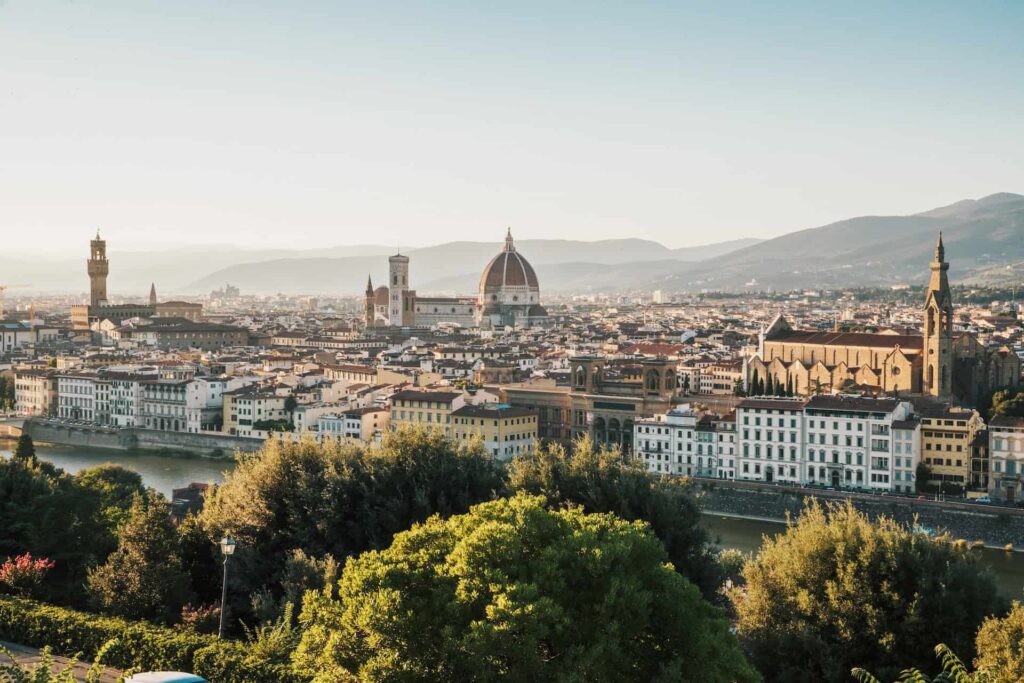


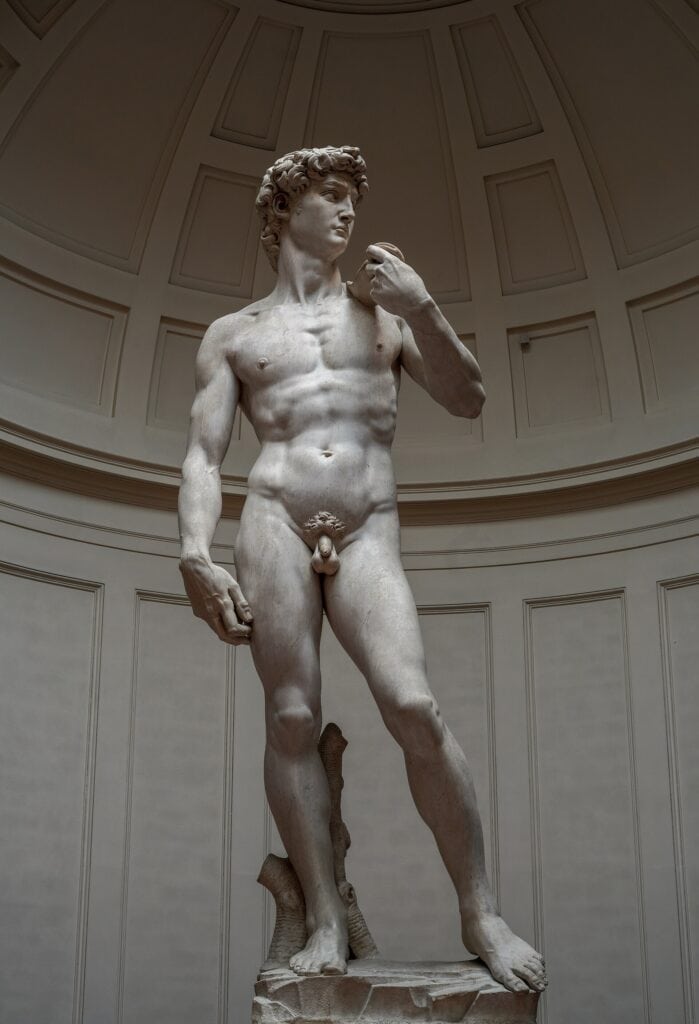
Florence is a city where Michelangelo continually returns, even without looking for it. David is the most obvious feature, but it’s certainly not the only one. His works are distributed across multiple locations, often far from each other, and each one tells a different story of his relationship with the city.
Following them also means understanding how Michelangelo was trained, who he worked with, which spaces he frequented and how Florence influenced his path.
The works then become a way to read his story. Not as a simple biography to be studied, but as something reconstructed step by step, moving from one place to another. Florence is the context in which much of his life took shape, between apprenticeships, important commissions, complex relationships, and moments of rupture.
If you’re planning to see Michelangelo during a visit to the city, it makes sense to do so, letting the places tell you who he was and how he became one of the most recognizable artists in history.
Michelangelo and Florence: the beginning of the story
Michelangelo was not born in Florence, but it is here that it grows and forms. He arrived as a child and, like many artists of the time, entered a workshop very early. He spent his first years with Domenico Ghirlandaio, where he learns the basics of the trade, but the decisive step occurs shortly after, when he comes into contact with the Medici environment (if you’re interested The history of the Medici family in Florence can be found here!).
For a young artist, that’s one of the most stimulating contexts imaginableIn addition to his commissioned works, Michelangelo lived in an environment where art, politics, and culture were constantly intertwined. He studied ancient sculptures, closely observed the works of other artists, and began to develop a very precise idea of what he wanted to do.
This relationship with Florence, however, is never linear. On the one hand, there’s the city that provides him with opportunities and enables him to grow. On the other, there’s a difficult, independent nature that often leads him to clash with those who commission his work or with current expectations.
This tension is also found in the works you can see today. Some are linked to his formative years, others to major public commissions, still others to more complex phases of his life. Viewing them all together, even across time and place, helps reconstruct this relationship built on strong bonds and constant travel.
It makes sense to start from here: not from a single masterpiece, but from the idea that Florence, for Michelangelo, It was both a starting point and a place to confront throughout my life.
The David and the Academy: The Moment When Everything Changes
It is difficult to talk about Michelangelo in Florence without starting from David. Not only because it is the most famous work, but because it marks a precise passage in its history.
When it was created, Michelangelo was still very young. The block of marble from which the statue was born had already been worked by others and was considered difficult to use. Taking it and transforming it into something completely different was, in itself, a statement.
Today the David is located inside the Accademia Gallery, but its relationship with the city began outdoors. For centuries it was exhibited in Piazza della Signoria, in front of Palazzo Vecchio, in one of the most visible and symbolic points of Florence. It represented an idea of strength, independence, and balance between tension and control.
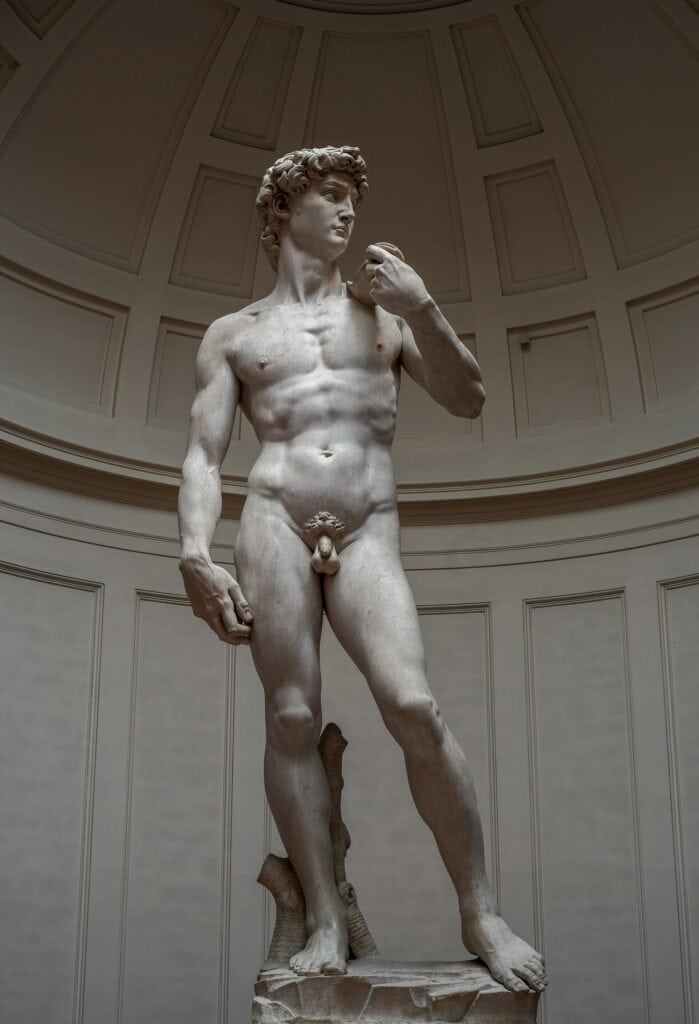
Entering the hall of the Academy where it is exhibited today, the first thing you notice is precisely this voltage. The body is still, but not relaxed. There’s a restrained energy, as if the action were about to begin at any moment. Even without knowing the story of the work, it’s a sensation that comes instantly.
Seen in this light, David isn’t just an isolated masterpiece. It’s the point where Michelangelo demonstrates his already distinct, recognizable voice. After this work, his name gains importance, and his connection to major commissions becomes inevitable.
This is why it makes sense to start from here, but without stopping. The David is the moment when everything becomes clear. The rest of the works, scattered around the city, tell the story of what happened before and what happens after.
The less obvious works: Bargello and Casa Buonarroti
After the David, it’s easy to think that everything else is a linear consequence. In reality, some of the most interesting works for understanding Michelangelo are: they are found in less immediate places, where the comparison with his work becomes more direct.
Bargello Museum
Here you will find a series of sculptures that show a different Michelangelo, younger in some cases, more experimental in others. Bacchus, for example, has an unstable, almost deliberately imperfect balance. It does not have the controlled tension of David, but something more uncertain, more human. Even the Gross, made much later, gives a different sensation: more rigid, more restrained, almost unfinished.
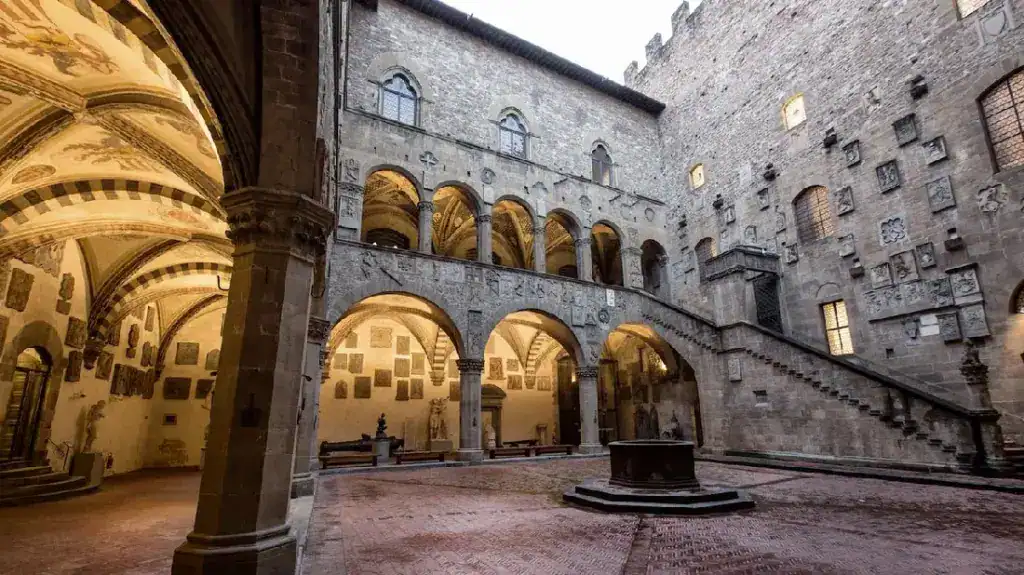
These are works that work precisely for this reason. They force you to pause a little longer, to observe the details, to understand what is changing in the way Michelangelo worked marble.
Buonarroti House
A similar argument applies to the Buonarroti House, which is often skipped because it is not included in the fastest routes of the city. In fact, it is one of the few places where you can see works related to the early years of its formation, such as the Madonna from the Scala one at Battle of the Centauri.
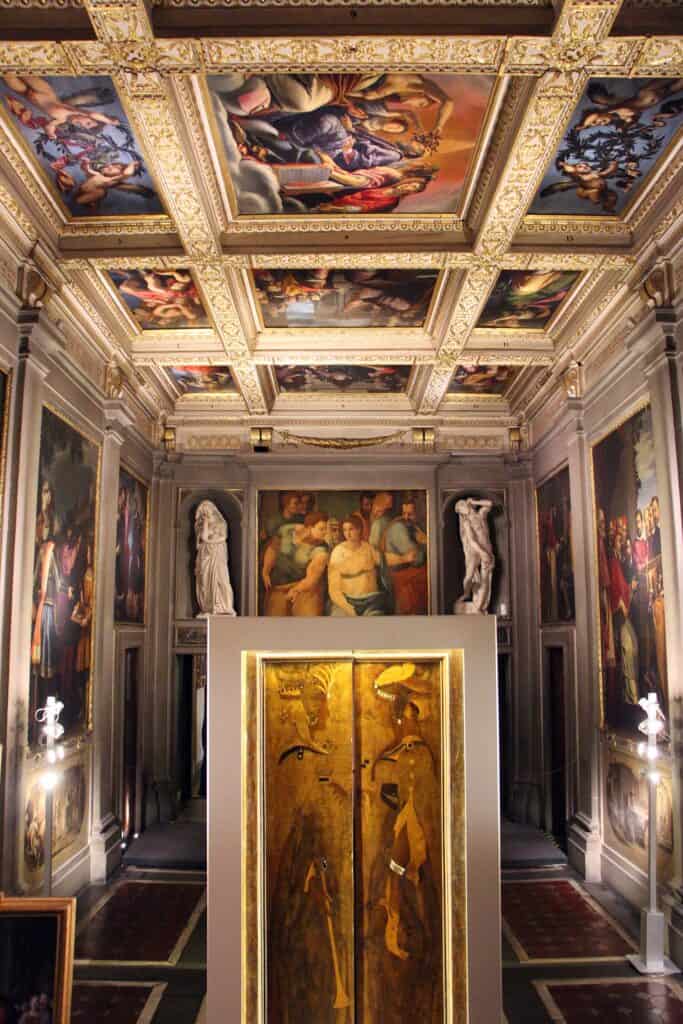
Here the comparison is even more interesting, because you’re faced with works in which the language isn’t yet fully defined. You can already glimpse some traits that will return later, but everything is less resolved, more open.
Visiting these places after seeing the David changes the way you interpret them. You’re no longer looking at individual works, but rather piecing together the steps of a journey, with a perspective closer to the way an artist constructs their work over time.
San Lorenzo and the Medici: a relationship that is never simple
If you really want to understand Michelangelo in Florence, sooner or later you have to go to San Lorenzo,one of the places where his relationship with the Medici becomes most evident.
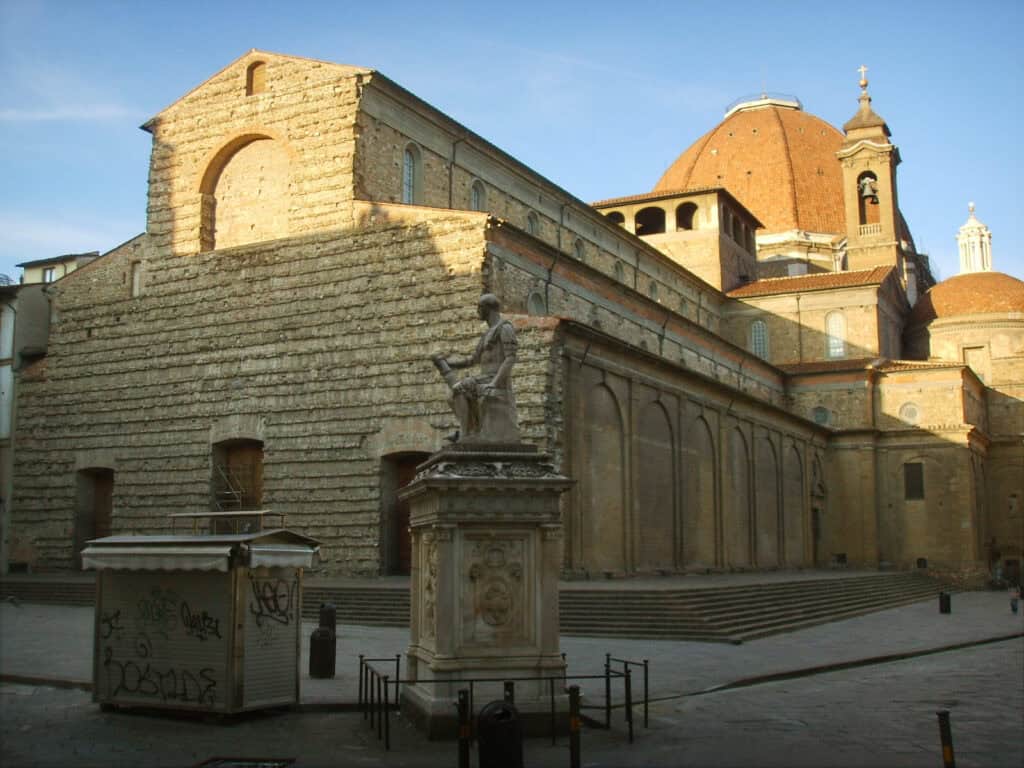
Michelangelo came into contact with them when he was still very young. He lived in close contact with the environment of Lorenzo the Magnificent, studies, observes, grows in a context that few other artists could have. This bond, however, it never remains simple or linear.
The works he created for the Medici family convey this tension well.
In the Sacristy New, for example, you can find some of the most particular sculptures of his career: the figures of the Day, from the Night, of the Aurora and of the Dusk. They don’t have the “resolved” perfection of the David. They are more unstable, more complex, almost as if the marble were never completely still.
Even the bodies are different. The proportions aren’t always classical, the poses are less immediate, and the overall impression is that research is ongoing, not a definitive solution.
This type of language reflects Michelangelo’s time well. He works for one of the city’s most powerful families, but at the same time maintains a distance, a freedom that often translates into unconventional choices.
Visiting San Lorenzo with this in mind significantly changes your perception of the space. You’re not just looking at monumental tombs or architectural decorations, but a collection of works that tell the story of a relationship marked by collaboration, tension, and, at times, even rupture.
It’s one of those places where the artist’s history and that of the city are intertwined in a very direct way, without needing much explanation.
The works of maturity: when work changes direction
While Michelangelo’s most famous works convey a highly controlled force, something changes in his later phases. His relationship with marble becomes less definitive, more open, and in some cases even more unresolved.
One of the places where this is most noticeable is the Museum of the Opera del Duomo. Here is the Bandini Piety, a work Michelangelo worked on at a late age. Unlike other, more famous sculptures, this one doesn’t give the impression of being completely finished. The surfaces are less refined, and some parts appear to still be in progress, as if the process were still visible.
The composition is also different. The figures are more compact, less exposed, and the whole conveys a more intimate feeling. There is no longer the same “outward” tension that is perceived in David. Here the gaze is narrowed, focused on a few elements.
According to some sources, Michelangelo even damaged the work during its construction, dissatisfied with the result. Regardless of how accurate this episode is, the fact remains that we are faced with a work that does not follow the classic idea of perfection. And that’s precisely what makes it interesting.
Looking at this sculpture after seeing the previous works changes the way you interpret the entire journey. Florence is no longer just the place of great beginnings and the most celebrated works. It also becomes a space in which to recognize more complex, less obvious, but equally important, passages to truly understanding Michelangelo.
How to include Michelangelo in a visit to Florence?
Good question. It all depends on how much time you have and what you’re really interested in seeing.
If your visit is quick, it makes sense to focus on one or two places and not go beyond that. The David alone is enough to understand why Michelangelo occupies such a prominent place in the city. In this case, the visit remains more essential, but not necessarily superficial.
If you have a few more hours, you can start broadening your horizons. Add the Bargello, pass by San Lorenzo, and stop at the Opera del Duomo. You don’t need to visit them all in the same day, nor do you need to follow a specific itinerary. Simply connect two or three places and let the artworks connect them.
Ultimately, there’s no right way to “see Michelangelo” in Florence. You can stop at one masterpiece or follow its route in stages. In either case, what matters is how you choose to look at it.